Showing posts with label anger. Show all posts

January 13, 2026

Humble and Faithful

Ever get stuck in a situation where you felt something called “Imposter Syndrome?” It’s when someone is being asked to do something outside their comfort zone that they are not sure they can handle.  They’ve been asked for an interview by the paper, or a boss wants them to take on new responsibilities, or they volunteer for a charitable organization, and they are not sure they can.  Sometimes panic ensues and people start feeling like imposters, they lose their self-confidence, they try to back down from their responsibilities and commitments.

It almost sounds like that was what John was feeling when he came face to face with Jesus.  He had been preaching that people needed to take a really good look at themselves with honesty and vulnerability.  And folks flocked to be baptised in the Jordan River.  It became a moment of epiphany for many people and a symbol of freedom.

John baptised them when they came ready to be honest about their flaws and failings.  Often times people might think that confession is meant to make us feel guilty or ashamed of who we are.  Certainly some churches do seem to preach shame and guilt when they talk about confession.  But it was more like if you go through your week gathering stones in your backpack, stones of broken promises, hurt feelings, maybe a little conflict here and there, and what people call trauma incidents.  You know, where the boss complains about an e-mail misspelling you made and you go home and yell at your cat kind of thing.  Or you watch the news and see stories of invasions, shootings and global warming. The more stones we carry of mistakes, hurts, problems, worries, anxieties, fear and anger, the heavier we feel and we don’t even know it.  The more rocks in our backpack, the more likely we are to yell, cry, panic or run away.  In modern coaching and leadership training, it’s called “going below the line”.  Simply put, the line is fear; when we go below the line, as Brene Brown puts it, we let fear take control.  Fear is in the driver seat of our car.  When we are above the line, we may feel fear, but it’s not driving us.  We are still in control of where we are going.  Sometimes our fear manifests as anger, part of the fight-flight response.  The more likely we feel like we can control a situation, the more likely we are to throw our weight around, yell, or ‘know” that we’re right and everyone else is stupid.  We see this in what’s happening around us today.  People who are angry about immigrants taking jobs or Toronto being uppity or Ottawa cheating us out of what we think we are entitled to, may be acting that way because they are afraid of losing their jobs or not having enough money when they retire.  So, they fight. Sometimes our fear makes us avoid conflict.  Sometimes our fear makes us freeze up.  We don’t know what to say or do, and it’s only until after the conversation is over that we think of what we could have said.  There’s also fawn.  That’s where we look for someone who is strong, powerful and clear in what he or she thinks is right.  We cozy up to that person and hope that they will keep us safe.  History shows that a culture where fear and anger towards the other is encouraged, ordinary people elect dangerous dictators like Hitler and the violence spirals out of control.  Fight, flight, freeze, fawn, are all biological responses to when we feel threatened, and they are how our ancestors survived encounters with sabre-toothed tigers.  They are normal.

That’s how John could have reacted when Jesus showed up.  He was starting to slide into fear.  “I’m an imposter.  I’m not good enough.  You are going to take away my job.  You are going to take away my audience.”  It’s a natural fear-based response to a sense of scarcity.  Jesus didn’t go there.  He didn’t say, “John, you worthless second-rate has-been, I’m moving into the neighborhood, and taking over from you, go find a new crowd elsewhere.  I’m the real boss and you can either kiss my feet or move on.”  No, he reminded John of why he and John were there, to honor God.  He went back to their mission.  “Let’s do what’s proper to fulfill God’s Justice.”  It was all about his big why, and John’s big why.  Bringing people out of the fight, flight, freeze and faun responses into abundant life.  Helping people let go of their backpacks of anger and fear, the shame, blame, broken promises, hurt feelings, conflict and trauma responses.  Lightening their loads.

Two wrongs never make a right. Two people using force to get their way never make peace. Two sides arguing that the other is a villain without redemption doesn't build respect. Two actions based in greed doesn't build trust. Two decisions based in fear doesn't establish love.  Jesus and John built two understandings, two mutual feelings of respect, two views of generosity, two experiences of teamwork.  They found they could respect each other, trust each other and do the work God called them to do.  When they did that, God showed up in dramatic fashion and said, “well done, you are my beloved servant”.

Humble confidence is the goal.  Staying above the line is the goal.  Not letting fear fill our backpacks.  Not letting us get so filled up with anger, judgement, resentments, hurts and guilt that we can’t move.  Facing ourselves with compassion so that we can be gentler with ourselves and others.  AA calls it taking a fearless inventory.  We in the Christian Church call it confession.  It’s all about learning to internalize the idea that God reconciles and makes us new.  That we are healed by God’s healing waters so we can love and serve others like Jesus and John did, together with trust and respect.  And when we do, God shows up and says, “these are my beloved children with whom I am well pleased.”  May it be so for us all. Amen.

March 05, 2024

Raging against the Machine

Anger is a dangerous tool.  It’s intoxicating when we feel we have a legitimate reason to let it all out and pull out our whips, rant at people present in the room and knock over tables.  It feels good.  Or at least for the first 10 or 20 minutes.  Then remorse sets in and we start second-guessing ourselves.  Did we do it for the right reasons?  Was that the only way we could get our point across?  Did it have the results we hoped for?  And when we ask those kinds of questions, often the answer is a resounding ‘no’.

Anger often lowers the trust we have in the angry person.  It can also emphasize our own vulnerability.  The news recently of a shooter invading Edmonton City Hall is a good example of this.  The beautiful glass pyramid was the location of celebrations, heated debates and controversial presentations, but it was open to everyone, adults, children, new Canadians, First Nations, rich and poor alike.  Now because of one man’s anger, that has gone from City Hall.

It's easy to imagine that being the response of the temple authorities to Jesus having his little hissy fit.  Whether we read the Mark version or the John version, the leaders were not happy. They wanted to know why Jesus thought he had the right to pull such a stunt.  It was upsetting enough that his disciples all remembered it a little differently.  Mark’s story has Jesus quoting scripture, John’s has Jesus predicting his death and resurrection.  Mark remembered it happening just before Jesus was crucified, and John told it as happening as the start of Jesus’ ministry.  Either way it was so memorable that it got into all 4 gospels.  Even Christmas doesn’t get into them all.  So, this is right up there with Palm Sunday, Good Friday and Easter.  This is an important story.

It is easy to point a finger at the scribes and Pharisees and say, “boy did they ever get it wrong! At least we don’t worship like that!”  This is problematic on two counts.  One is that it assumes that they were bad, and that assumption has sometimes slipped into anti Semitism.  The other assumption is that we aren’t like them, and that too is not helpful.  It says that the way we do things in our church or our denomination is perfect, and so are we so we don’t have to change.

Worship isn’t perfect.  And maybe it should never strive to be perfect.  Oh sure, there are the churches who have teams of technicians, multitudes of musicians, a preponderance of polished preachers, and a horde of happy hosts clamoring to greet you at the door.  There’s a church near Halifax that went from 20 people to a congregation of over 500 people in the space of three years, whose preacher got on the cover of a magazine!  The church even put out souvenir dvds of that day’s service that they sold to folks as they left the sanctuary.  They were pressing those dvds as fast as others were pouring coffee in the fellowship hall.  It was quite the entertaining event.  For many, it was a powerful spiritual experience, complete with laying on of hands, speaking in tongues and spiritual warfare.  Heaven and Hell were mentioned as both bribe and threat.  The lighting was superb and the slide show was flawless.  Is that what worship is supposed to be?

It’s easy for us to look down our noses or be jealous of that kind of worship, but worship is supposed to be a time when we come together to support each other on our faith journey.  It’s a time when we look and listen for signs of God at work in our our world.  It’s a time when we open ourselves to learning something new, something we hadn’t thought of before, something that may spark new ideas and new insights.  It’s a time where, as one theology writer said, “we are to comfort the afflicted and afflict the comfortable”.  So those of us who are in a good space support those of us who are struggling.  And those of us who are struggling will pay it forward to the next person when we can.  All this is happening in worship.  We hope. 

The ancient Latin word for worship was ‘liturgia’ which translates to literally public service or may also be work of the people.  Something we all do together.  Something that helps us all serve each other together and serve the world.  It’s not something one person does to others.  It’s not a stand-up comedy routine or a dramatic monologue. It’s work of the people by the people for the people to serve and love God.

When we read the scripture of Jesus knocking tables over in the temple, it’s a time to ask ourselves how we are doing?  Are there things getting in the way of our worship?  Are there things that we can be adding or taking off?  This is a constant process.  Pews weren’t introduced into churches until the 1200s and there are Alberta churches that had no pews until the 1930’s or later in the Ukrainian tradition.  There was a church in New York that split in the 1880’s when a newfangled organ was put in, others rebelled at the 'honky-tonk pianos or the Methodists that belong only in bars' or even singing.  We substituted grape juice because of the temperance union movement, and I’m sure that annoys some folks, and comforts others.  But however we worship, whatever way we worship, Jesus calls us to focus on God.  Not on our performance of worship.

The temple leaders were shocked at Jesus.  If he came here today, we might be shocked too.  But as we worship, as we wrestle with the scriptures in this place with our community of faith, we are also wrestling with Jesus, who continues to call us to look at why we worship and how we worship.  We are called to celebrate God’s presence here among us. May it all be to the glory of God and to loving our world.  Amen.

February 14, 2023

Dealing with Dinosaurs

This week many of us had an incredible shock when we opened up our utility bills.  Heating costs, electricity, even our town services were up.  Then CBC had a news article that World's five biggest oil majors likely took in $200B in profit last year, and followed it up with a story that the Alberta Government wants to give up to give oil and gas companies up to $100M in credits for meeting their legal obligations to clean up old well sites.  While these companies may not be the same big five that had the big profits, and may be subcontractors as far as I know, it seems confusing to me that they need assistance when their profits are so big.  Maybe some economist can explain things to me.  I just don’t get it.

Bills, politics, war, earthquakes, busses crashing into daycares, there are days when the news feels overwhelming and it would be tempting to stay in bed with a pillow over my head pretending the world doesn’t exist.  And folks are struggling with their fears and challenges, it’s not just me.  Someone I care deeply about is having a rough time of it and I have certainly needed my fair share of hugs this week too.  I’ll probably be taking a box of valentine chocolates up to the RCMP detachment.

The way the world is these days, it would be very easy for me to slip into a state of anger and fear, and it’s tempting to send that anger to the wrong folks.  We humans can do that very easily.  We get angry with a spouse or child when we really are angry at the boss.  Or the next door neighbor or even ourselves, especially after a fender bender. Sometimes our anger can be positive especially if it fuels work for justice.

Sometimes our anger is triggered not by injustice but by fear.  An aged friend or parent breaks a hip.  An adult child crashes their motorcycle not once but twice.  A toddler gets lost or wanders off.  We react with our dinosaur brains, acting like we are crashing through the jungle, looking for something to roar at so we feel better and help us release all those fight or flight hormones that go surging when we feel threatened.  That’s normal, that’s what humans do, that’s in our DNA.

Except Jesus wants us to be more than dinosaurs.  Our scripture reading this morning in the gospel of Matthew was part of his big Sermon on the Mountain, his “I have a Dream” speech where he outlined his vision for what he hoped to build, a community of caring compassionate human beings who would be more than just dinosaurs, they would be bold, daring and deep disciples.

That meant that they would have to find ways to cope with their anger and fear.  That their relationship with each other would be taken as seriously as their relationship with God.  That when it came to the offerings and the rituals they did in their worship, they would do so after taking responsibility for the conflicts and miscommunications they were having.  And that they would do their best to be as honest, transparent, truthful and trustworthy as they could possibly be.

That is not easy.  Especially when we live in a culture that celebrates competition, that honors star athletes, that envies the rich, that strives to emulate the self-made man, that worships independence and craves the security that they think possessions will give them.  It’s like everyone wants to be the mighty T-rex or Albertosaurus and no one wants to be a duck-billed Edmontosaurus.

Not that much different from the time of Paul and Jesus.  Jesus didn’t pull any punches.  This part of his sermon counteracts the assumption that Jesus was meek and mild and trying to be nicer than the Old Testament teachings.  I often hear people say that the Hebrew scriptures are full of angry judgement and Jesus just taught love.  Here it’s the other way around, the scriptures Jesus quotes put a limit on human behavior, but Jesus wants to go deeper and put a limit on our thoughts.  Well, maybe not a limit on them, but a request to be accountable for them. Accountable to our community of faith.  Easier said than done.

Being accountable takes reflection.  It also takes dedication and commitment.  It’s not something we can speed up, and it’s not something that is easy or fast.  Goodness knows, I wish I could stand here and tell you I’ve got this nailed down pat.  There have been times when I wouldn’t or couldn’t put my burden down and run from the altar to go fix a broken relationship.  Sometimes the relationship was mended by time, sometimes it was so unhealthy that for my own mental health, I had to have good firm boundaries in place.  Sometimes I was able to figure it out, sometimes I went for counselling to get help figuring it out.  Sometimes I wished for the milk for infants Paul talked about, rather than the adult solid food that I was expected to eat.  Sometimes I wanted to find a Paul or Apollos I could follow instead of this challenging Jesus guy.  So it’s comforting to read Paul’s two thousand year old words that while he may have planted the seeds of faith and Apollos watered them, only God grows those seeds.  Whether it’s seeds of our individual ability to recognize when we are slipping into dinosaur mode, or the water of self-knowledge, it’s hard to recognize the times we are acting like a T-Rex.

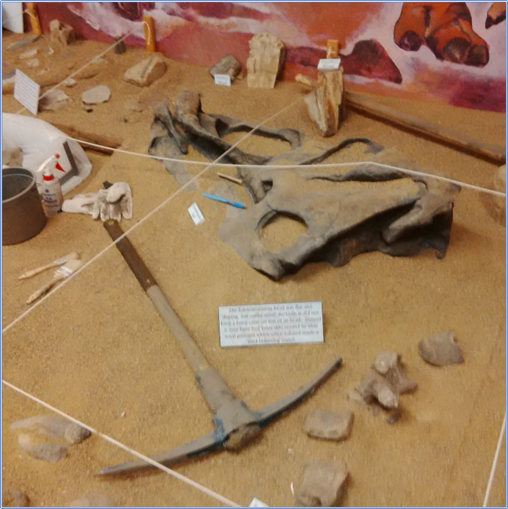
The good news is that Jesus is an amazing archaeologist, so good he makes Phil Currie look like an amateur.  When we come together to sing and think and reflect on his teachings, it’s like he takes another layer away from our tough dinosaur hides to reveal the fragile fossils beneath the surface that aremaking us roar and stomp as we try to protect them.  Good news for us T Rex folks:  the more we come together in community, the more human we can grow to be.  Thanks be to God for the seeds Paul planted, the stories Jesus taught, the watering by people like Apollos and the many other leaders down the ages that have guided and nurtured us so we too can guide and nurture those who also choose to follow Jesus.


July 26, 2022

Travelling light

The other day, I discovered a beautiful little nest sitting on my newly cut lawn (pictured here to the left). It looked like the adult birds had carefully built it right there and never used it. No eggshells, no feathers. It didn't even look like it had fallen from a tree. Perfect example of amazing architectural design then abandoned to the elements. Birds travel lightly, and do not hang onto their homes. 

Given the chaotic state of airports these days, we can't say the same. Stories of lost luggage and cancelled flights are filling our news feeds and people describe the trauma this has caused them. I had a family member travel to New York one year who lost their luggage and never again will they put all their prescriptions in their checked suitcases! We don't know how to travel lightly. Unlike the birds. 

Paul wants us to travel through life with at a light heart. He wants us to focus on dressing ourselves with peace and love and joy. And part of learning how to dress ourselves in that kind of Sunday best is by singing and praying and building community to get safety. Rather like a nest, we are woven into a place of safety that holds fragile beings growing in their ability to take themselves lightly.

I meet so many people living heavy lives of fear and resentment.  They don’t have a safe space, and they don’t know that they need a safe space for learning to live more lightly.  Often when they find out what I do for a living, they tell me how they left the church and the stories are full of anger and self-righteousness.  It’s like they are saying, “See?  That church was full of mean toxic people who hurt me.  I was right in leaving and I am right in staying away.”

Which is a heavy mindset.  It is stuck in fear, it is stuck in independence and self-protection.  Sure, there are times we should walk away from toxic situations.  And there are churches and groups and communities that people need to leave because they are toxic.

I get it.  We don’t get through life without getting hurt by others, and we don’t get through life without occasionally hurting others, sometimes accidentally, sometimes with good intentions.

But.  That doesn’t help us travel lightly.  All too often people who have turned their backs on church haven’t worked through the anger and fear that life event triggered in them.  They get stuck in resentment and anger.

They remember and retell the hurts over and over.  Psychologists are discovering that when we tell and retell our trauma stories, there comes a point where it is no longer healing but can retraumatize us.  It becomes a trigger for the same fight or flight adrenaline rush that we felt when the incident first happened. It entrenches our anger and self-righteousness. What if we experimented with forgiveness instead?

Both Paul and Jesus talked many times about the feeling of lightness that comes from forgiveness. We are supposed to forgive 70 times 7 and pray for our enemies.  That’s not easy.  Some think it’s about having positive feelings and thoughts about the person we feel wronged by, which I think is unrealistic.  Others talk about the legal interpretation, which is giving up all claims to exacting punishment for transgressions, but we need justice and accountability in our world.  I think that forgiveness can be choosing to let go of the retelling of our trauma stories in ways that hurt us.  And learn how to strengthen ourselves to being more Christlike, with that heartfelt compassion, kindness, humility, gentleness, and patience Paul talked about.  It doesn’t mean becoming doormats.  It does mean letting go of our resentment of the person not being better than they are, situations not being perfect, and justice not being always fair.

Holding grudges, hanging on to old stories of grief and injustice, can be like a rock we put in a backpack.  Every time we look at that rock, it gets a little heavier.  If we start collecting more and more rocks and seeing every little incident as a rock we can’t forget, our backpack gets continually heavier until all we can think about is that backpack and we can’t move an inch.

Jesus invites us to take a rock out of our backpack, say thank you for the learning you gave me, then set it aside.  Start small and work our way up.  Start with the person who drove through that stop sign in a hurry or grabbed the last package of bargain-priced pizza from the store shelf.  The bigger rocks that are really heavy may need help, get the lawyer, go to Together Talk or counselling.  The hardest rocks may be about me – how do I forgive myself for being duped by that scam caller, that con artist on my computer, that stupid mistake I do over and over?  Or bigger yet, how do I forgive God for the tragedy in my life?

Yes, sometimes we need to figure out how to forgive God.  Maybe not for giving us that pony we prayed for, like Robbie did, but for the more serious problems.  As far back as 1942 George Buttrick wrote about forgiving God this way: "If God is not, and the life of man poor, solitary, nasty, brutish and short, prayer is the veriest self-deceit. If God is, yet is known only as vague rumor and dark coercion, prayer is whimpering folly... But if God is in some deep and eternal sense like Jesus, friendship with God is our first concern, worthiest art, best resource and sublimest joy."  Calling God loving parent, as Jesus taught, helps us forgive even that toxic image we have of God.

Forgive us our trespasses as we forgive those who trespass against us is only one part of the Lord’s prayer.  May we pray it with persistence, humbleness and intentionality.  And may we let go of all that weighs us down until we travel through life as lightly as birds. Amen.


February 22, 2022

Spilled Coffee

So I’m coming out of Paddymelon’s with a big coffee mug full to the brim.  Someone jogs my elbow and what spills out all over the sidewalk? Coffee? 

Well, those who know me really well will say anything but coffee unless I’m bringing a cup of joe to my husband Tim.  Tea possibly, chai latte or London fog, white hot chocolate, just about anything but not coffee.  Why?  Because what I put in my coffee mug is what will come spilling out. 

So too, what will come spilling out of my mouth may be any number of things.  Since I’m a Canadian, an apology.  “Sorry,” I will say, even if the person jostling my arm was the instigator of the spill.

If I’m at home and it’s been a long day, and Tim backs into me when I don’t expect it, there may be something far different than “sorry” spilling from my lips.  And if the coffee mug drops, splashing boiling beverage all over me then shatters to a million pieces, especially if it’s a favorite mug from a beloved aunt who has long since left this earth, well, even I don’t want to hear the words spilling out of my lips.  And if it’s been a really bad week, with a funeral that shouldn’t have happened to someone too young or too close, well, there just might be tears involved on top of it all, and a real honest to goodness grief burst!

What comes pouring out can be quite situational, and quite human.  Being human is a messy business, with emotions that hit us when we least expect it, sometimes right between the eyes, sometimes right in the stomach.  We find anger flaring up, resentment, frustration, jealousy, envy.

We pray, God, fill us good guys with good things, we’re on the right side, reward us please, and punish the evil doers.  Dry up their bank accounts, impound their trucks, put their kids in the foster care system, confiscate their weapons, and lock them up where they can’t threaten us anymore.  That too is human.  But thoughts like these can fill us up with evil emotions.

Scripture says “Be still before God and wait patiently.  Do not fret because some prosper in evil schemes.”  Easy to say, hard to do, especially when our nightly news is full of disturbing images of police in body armor, collections of guns being discovered horded by protestors, of politicians scolding each other, of racist flags, of children being taught to blockade legitimate traffic between two countries.  Be still before God, wait patiently.  Even harder, let go of anger, and recognize the damage fretting can do to the human soul.  Trust in God instead of imperfect, messy humanity.  One of the reasons I believe so many people were entrenched in Ottawa is because they put all their trust in themselves and no one else.  If the election brought in a government that they don’t like, they don’t trust the rest of Canadian voters.  If the medical community brought in restrictions that they don’t want, they sneer at the very people trying to keep them alive.  If the scientists make discoveries they don’t understand, they call them names and view them as part of a mass conspiracy.  If the media tries to communicate what the voters, the medical researchers and the scientists are discovering and they find it confusing, they turn to other sources that stoke their anger.  They only believe in themselves and the hope that they will get their own way.

They do not have hope in ideals, in principles, in due process or in the Golden Rule.  Do to others as you would have them do to you is not where they are at.  I suspect that they would not respond pleasantly if someone moved into their homes and started blaring air horns 24/7 for weeks on end.

Luke’s passage has Jesus recognizing that not everyone will be able to hear his words.  “I say to you that hear me”, or in other versions, “you that are still listening”, means that he too knew the messiness of what Jeremiah called the deceitful human heart.  Jesus knew that what he was teaching was so hard that folks were tuning out.  He had just told them about the beatitudes, the Blessed are those who the world think are cursed, and that was a conversation stopper for most of them.  Then he threw a real zinger at them.  "Love your enemies, and do good to those who hate you."  Well, that is so against what human nature wants to do, that it would tune out a lot of his listeners.  No way would good Jewish people want to hear that they were to be loving to the Roman soldiers that oppressed them, the tax collectors that robbed them, the schemers and power brokers that bullied them.  But that is exactly what Jesus was trying to teach them.  And with his ‘Turn the other cheek’, he was laying the groundwork for nonviolent resistance.  As one internet pundit wrote, "Let me be very clear.  This was not a call to grit our teeth and be nice to bullies, to stay in abusive relationships or to be quiet in the face of injustice."  This was a call to make sure everyone could see the bullying for what it was, and by standing up to them to offer the other cheek, or giving them your shirt as well as your coat, was to show to everyone around that they were doing this shameful behavior but you still kept your dignity intact.  But how does that play out in real life, Jesus?

A good example is the Greensboro sit in back in February of  1960, where young black college students prepared themselves to go to a Woolworth’s lunch counter and sit there until they were served lunch.  They knew it wouldn’t be easy.  They practiced so that no matter what violence was thrown at them, they would stay calm and not retaliate.  They would not punch back, they would not fight, they would not bring in guns or weapons or horns or hot tubs or flags, they would just sit until they were offered a menu.  Four young college students sat waiting for food that did not come.  The next day they were back, and the news spread to other colleges in the Southern US.  At one point there were 300 students at that lunch counter, and it became one of the cornerstones of the Civil Rights Movement.  Segregation ended although the racism never did.  But that Woolworths counter now houses the International Civil Rights Center and Museum, which includes the lunch counter where the Greensboro Four sat.

Coffee was served to anyone who wanted it, and tea and probably some iced teas and sodas.  And eventually the love that they had for their cause and for justice and equal rights for all spilled out on everyone around them.

What are you putting in your coffee mug?  What are you putting in your heart and mind?  Are you able to hear Jesus teach you to love your enemies and do good to those who hate you?  It’s not easy, of course, but I trust that this is what God is calling us to do.  Not to love the angry actions of the people who are hurting others by their noisy protests, but to look at them for the stunted shrubs in a dry desert, for the hopeless people that they are who don’t know how to trust in anyone but themselves.  Who put anger in their coffee cups and don’t drink anything other than that.  And to fill up our own coffee cups with stillness before God so that when the difficult times come and we are jostled by life, what will spill out will be peace and hope and compassion for all who struggle through these difficult times.

September 28, 2021

Cutting remarks


 What a wild and weird pair of scriptures we have this morning.  The Exodus passage about Zipporah, and Mark’s heavy-handed amputation text.  Both are about cutting things off physical bodies and are disturbing to say the least. 

The Zipporah story happens after Moses encountered the burning bush and was on his way back to Egypt.  The original Hebrew is so barebones, it’s hard to translate.  Who was killing whom, did Zipporah cast or touch the skin to Moses, why was God angry in the first place, and why did Zipporah have a flint knife in the bronze age?

Imagine, people have written books and essays on those 2 little verses, trying to understand just what was going on.  I certainly had never heard of the ‘bloody bridegroom’ before someone here asked about it, not what I was expecting when I invited folks to submit bible passages or quotes they were curious about.  Some people read this as Zipporah, the daughter of a priest, using a ritual obsidian knife, doing the rite while Moses was sick and recommitting herself to their marriage.  Others hear this as Zipporah being angry at Moses for not having circumcised his son, and throwing down the skin in disgust.

The Hebrew is that vague and that easily mistranslated.  But consensus seems to be that she was cutting off that which she saw was a barrier between Moses and God.  Jesus talked about cutting off whatever was separating his followers from God too.  He was using shocking language that would have upset his folks.  Back then there were no prosthetics and no effective anesthetics. Losing a limb often meant death by blood loss or being condemned to a life of begging, unless a family member would take the unfortunate person in.  Losing a foot or a hand was dangerous!

Jesus didn’t want the disciples to start amputating body parts right and left.  He wanted them to take very seriously what it meant to be his followers.  He wanted them to realize how dangerous their attitudes could be.  Let’s remember what they were doing when he scolded them.  They were getting ready to judge someone who was not part of their inner circle.  Someone who was casting out demons in Jesus’ name. 

Now to put this into context, this is the same chapter which talks about Jesus going up to the mountaintop with Peter and James and John, and when he came back down, the rest of the disciples had failed to heal a child of her demon.  So, to see other people do what they had failed to do must have been downright galling.  They were jealous!  They wanted Jesus to cut the others down and condemn them as outsiders. 

Jesus said that he didn’t want to copywrite his name, or to give the disciples an exclusive franchise on the use of his name.  He wasn’t interested in trademarking his healing skills, and he didn’t want the disciples to think that they could be an exclusive club.  But more importantly, he wanted to turn them away from focusing on what other people were doing wrong to focusing on what they could be doing better.

He didn’t say, cut other people’s foot off, he was saying cut your own foot off.  In other words, instead of being angry and resentful and jealous of other people, of being judgmental about them and flying off the handle at them, stay focused on your own spiritual journey.

We have seen a lot of people expressing a lot of anger and frustration these last few weeks.  There’s anger at the government for not doing enough.  There’s anger at the government for doing too much.  There’s anger at my neighbor for disagreeing with me.  There’s anger at my family member for not agreeing with me.  It seems like we’re caught up in an epidemic of anger as much as anything.  And an epidemic of finger-pointing, resentment, jealousy and frustration.

Jesus said to his disciples that rather than point fingers at someone who was having success, they should look at themselves first.  Why were they feeling jealous of someone else?  Why were they being tattle tales and grumblers?  Why were they sure that they had the right to feel superior or to be the insiders who knew better than the rest?

It is easier to blame others for our frustrations and our anger bursts than it is to look inside at our own pain.  Parker Palmer talks a lot about how we are addicted to fixing, saving, advising and correcting others.  We like to be right, we like to be indignant.  We like to judge and be angry.

But that’s not what a Christian is called to be.  Some of the greatest saints of our faith spent a good deal of time wrestling with their darker nature.  They may not have cut their feet or hands off, but they did circumcise their hearts and minds.  Sometimes, like Moses, they were in so much trouble with their anger and their jealousy that they needed someone else, someone wise and faithful like a priestess’ daughter to help them see the source of their disconnection with God and cut that source off with a ritual practice.  Moses was the big hero, the man with all the tricks up his sleeve that would free his people from slavery, but it was his wife that remembered that faith begins at home. 

What do we need to cut off in order to live more faithfully?  This summer I tried drying my clothes on the line like I remembered my grandma doing.  I wonder about buying a solar panel to charge my phone.  I drive my hybrid car to the city less.  I hope to find ways to lower my carbon footprint, as I’m sure you are too.  I cut off my words and thoughts when they slip into racist assumptions, I circumcise my discomfort when I hear stories of residential schools or oppression or racism or homophobia.  These things are painful for us to face and admit, but they are barriers to our relationships with one another and God as well.  When we look at ourselves first before pointing our fingers at others, we are able to start out on our heroic journeys as Christians and healers.  Let us follow Jesus on the path to building a more loving and peaceful society for all creation.


August 31, 2021

“Am I My Brother’s Keeper?”

How many of us remember the question, “Am I my brother’s keeper?”  Despite being a bit of a bible geek, I did not remember where it was found in the bible and did a google search to figure it out.  Much to my surprise, it wasn’t a trigger that inspired a parable by Jesus, nor was it a question asked by the Pharisees, or even a phrase that Paul had coined in one of his letters.  It was, however, in Genesis 4.

The last time I read that story was as a kid in my illustrated story bible.  ‘Cain and Abel’ is a tale of common humanity.  Jealousy of a sibling is something many people are familiar with although not many will admit it.  Even more common is making an excuse when caught red-handed.  Cain defensively and angrily tried to deflect God’s question. 

God told Cain to let go of his anger and jealousy, but Cain hung onto it, and nursed it, according to the scriptures.  As James wrote in his letter, “let everyone be quick to listen, slow to speak, slow to anger; for your anger does not produce God’s justice.”  Cain’s anger did indeed not produce God’s justice.  Cain fed his anger until it boiled over into violence.  And then he refused to take responsibility by deflecting God’s question.

We’re not murderers, as far as I know, but the question of “Am I my brother’s or sister’s keeper?”, feels central to the tension we are now seeing in many conversations.  It is a difficult ethical question to ask of ourselves.  The people who are covid deniers or anti-vaxxers are ready to accuse us of being sheeple and worse at the slightest opportunity.  They promote medications that are proscribed for livestock, as if that is safer than a vaccine developed by some of the most educated and dedicated medical experts in the world.  Their anger does not lead to justice, which at this time would be vaccinations distributed to more than just 2% of the world’s population.  Nor does it build up love and community in this country.

“Am I my brother’s keeper?” is a justification for not taking care of one another, not taking responsibility for how our actions impact others.  Remember the first Star Wars movie when Han Solo delivered R2D2 and Princess Leia to the Rebel Camp after escaping Darth Vader and the Death Star?  She says to him, “It’s not over yet”, and Han says defiantly, “It is for me, sister. Look, I ain't in this for your revolution, and I'm not in it for you, Princess. I'm in it for the money.”

That is where a lot of people are right now.  They are in it for themselves, and no one else.  They struggle to deal with change or with being asked to do something like wear a mask or get a vaccine that doesn’t benefit them or their bank accounts.  They are coming from a place of defensiveness that says “I don’t want to do anything someone else tells me I should do” or “I don’t need to care about others getting sick”.  They are coming from a place of entitlement, or anger or shame or fear or denial.  Ultimately, they don’t want to have to change for someone else.  They fear being controlled by someone else.  And their fear of being controlled is so strong that they do irrational things.

It’s always easy to see when it’s them out there that are stuck in the question of “Am I my brother’s keeper?’  But what about us who want to follow Jesus?

Christians are not called to judge our neighbors, as tempting as that might seem.  Or as widespread as that might appear – judging those who have vaccines, those who don’t, those who are staying home, those who went to the Calgary Stampede, those who have Covid, those who don’t believe in Covid, those who sanitize their hands, those who hug everyone they meet, those who know who they will vote for, those who don’t know if it will make a difference whether they vote or not.

As Jesus said, “Let he who is without sin cast the first stone.”

We are to look within, noticing the times we resort to anger or respond with greed or jealousy or pride or denial or resentment.  The times we lie, or say nasty things about people behind their backs, the times we don’t listen to someone with a different point of view.  The times we lash out or the times we fail to speak up.  Especially now, the times we need make changes and accommodations that we feel are unnecessary or unimportant.  More now than ever, change will be hard and resented and rebelled against.  Clinging to human traditions when they no longer help us connect with the holy can lead to the exact kind of Pharisee thinking Jesus was condemning.

It’s not how our church is set up, or how we feel about wearing masks in church, or being asked if we are double-vaccinated or where we sit that makes us unclean.  It is the anger and resentment, or stubborn clinging to what we think is the right way of doing things that can break down our relationship with God.

Ultimately, we are called to be more than our brother’s keeper.  We are not to enable or abandon them, but to love them.  Jesus taught that we are to love our God with all our heart, with all our soul, with all our strength, and with all our mind; and love our neighbor as much as we show compassion to ourselves.  That is what is truly important.  Loving God, loving neighbor, loving self.  We can do this, and when we do, we are following the way Christ calls us to be, turning back on what makes us unclean and worshiping God in ways that make a difference in the world.  May it be so for us all.


November 27, 2019

Backflips for Jesus?


So I was at a party a week ago and someone started to sing one of the songs from Jesus Christ Superstar.  I was quite surprised as she’s not a church goer, and hasn’t particularly shown a lot of interest in what I would call a big theological debate or conversation.  Yet here she was singing her favourite song – the song of Simon the Zealot ( https://www.youtube.com/watch?v=I3bZqqe_s84&list=PLWMIGF70kAjtnE-NGrqrErtycIh4OHp3u&index=3&t=0s ) “Christ you know I love you, did you see I waved? I believe in you and God so tell me that I’m saved.”  It’s a perfect example of how we do a real disservice to Jesus as mere humans.  We think it’s all about power, military or political power.  Again and again we try different ways of understanding who Jesus is for us.  What kind of king was he and more importantly, is he? 
In the movie version, the zealots want Jesus to manipulate the people into choosing violence to deal with their oppressors from Rome.  They want Jesus to twist his message to one of hate and anger.  They want him to incite riots and start a war.  They understand power to be solely political, us versus them.  A black and white world where only the strong have the right to survive and all opponents will be crushed in their crusade.  The movie shows the followers doing back flips in their excitement in hopes that Jesus will notice them.
How different that is from the scripture we read this morning.  It reads like an intimate report by someone close enough to have heard that last small conversation between three criminals executed in the most shameful, embarrassing way possible for Jewish men.  It was meant to be a deterrent, to promote obedience and quell any thoughts of rebellion.  This is what they did to traitors and other enemies of the state. Hanging on the cross in the hot sun, even their robes taken from them so all could witness that they were just scrawny weaklings.  How humiliating and disgraceful it must have felt to be treated so. 
I can imagine some soldier there listening idly to the thieves and Jesus as they waited the long hours it took for the crucifixions to kill the men.  And the thieves reacted like humans have done ever since to the idea of Jesus being someone special, someone inspiring, someone holy.  One mocks Jesus, happy perhaps to have someone to lash out against with his last dying breath.  I may be in pain, I won’t get out of it, but at least I’m not as ridiculous as you with all your talk of holiness and a new kingdom of God all touchy-feelie, lovey-dovey nonsense.
The other recognizes something different about Jesus.  Maybe it was his dignity, or his manner, or how his followers wept and witnessed to his final hours.  We don’t know.  But something about Jesus made the other thief pay attention and offer allegiance to Jesus, a dying man who had nothing to offer, no power, no control, no strength to save his own life.
I think we all face the same struggle.  Who is Jesus for us?  When I started going to church after my angry atheist stage, the last thing I wanted to think about was some weird stuff about Jesus having magical super powers, being special, being so exciting that I would want to do cartwheels and back flips.  I didn’t want some over the top, rolling on the ground experience that would leave me all open to emotional manipulation.  Not my style, and far too threatening.  The Jesus Seminar came out and some scholars tried to make Jesus just an ordinary person, only human, nothing special, just a particularly good man.  But the more I heard the stories and the more I learned and listened, the more I realized that Jesus was not just a nice man who loved people.  He had to have been a very strong man to resist over and over the temptation to become a war leader, a rebel, a politician leading a coup, a new king taking over the country by passion and propaganda and maybe even a few little secret back room deals here and there. 
He constantly resisted the temptation to save himself from his fate.  And he constantly pointed to something more powerful than Rome, more lasting than the Temple of Jerusalem, more enduring than vast armies at his beck and call.
The thief said, “Save yourself” and he resisted that.  It wasn’t about him at all.  It was about God first and foremost.  Even today we are faced with the temptation to do it all ourselves, to be strong, be tough and never ask for help.  Be independent, be full of the right answers.  This is the age of “Do it yourself” psychotherapy and spirituality.  Jesus didn’t do that.  He asked for God’s help to do what he must, to do what needed to be done, even to die on the cross.  To die as an example, a witness to a different kind of power, the kind recognized by the second thief.  The kind of power that doesn’t transform through violence or manipulation, threats or bullying, but the kind of power that gently transforms cultures and attitudes and opinions with gentleness, patience, endurance, joy and forgiveness.  The kind of power that challenges us to say to each other and ourselves words of hope and encouragement, love and forgiveness.  That kind of power transformed the Roman Empire, and transformed the way we take care of each other, the way we shape our society.  It continues to transform us, to hold us accountable to a higher standard, and to guide us into ever more loving ways of being in community.  The kind of power that never ends and continually inspires us to greater and greater deeds.  Okay, maybe not cartwheels and backflips, but something even harder, the transformation of our hearts until we can say “Jesus Remember Me when you come into your Kingdom.”