Showing posts with label racism. Show all posts

December 23, 2025

What's Your Sign?

 Have you ever asked God for a sign?  Did you ever receive a sign?  Both of these are not questions we ask easily in the United Church.  We are logical, rational human beings not given to flights of fancy. Some of us refuse to ask for signs, some of us ask for signs too often. It’s hard to get a handle on, and it can feels like getting our tea leaves read or staring into a crystal ball.  Maybe it’s more like driving down the highway in a snowstorm, unsure whether to keep our high beams on or not.  Those times when the snow is blowing so thickly that we can’t see ahead no matter how fast or slow we go.  We look with anxiousness for the next sign for our turn off or to get a sense of where we are or how much further we need to go.  I often feel like I’m getting close to Athabasca when I see the moose crossing sign on the highway.  I look for that sign, and when I see it, I know where I am.  I also know that when I see it, I need to take extra care and be alert for unexpected hazards.

Our Isaiah reading has an unexpected hazard in it.  If we cherry-pick how we read Isaiah, the longest book of all the prophets, we can indirectly feed into antisemitic attitudes.  The attitude that the Hebrew scriptures are useless or full of an angry God or only valuable when they predict the arrival of Jesus is a way of diminishing the influence of Jewish theologians on the world and on Jesus.  The verses we heard this morning were once translated as ‘behold, the virgin is with child and will bear a son” but that is based on a Greek mistranslation.  Now scholars have restored the ancient and accurate meaning to us.  When we put it into context, we see that Isaiah was preaching to King Ahaz who was facing a civil war with two other kings.  The two kings planned to attack Jerusalem, kill Ahaz and put a puppet ruler in his place so they could attack the Assyrian Empire.  Ahaz was unsure what to do.  Isaiah challenged him not to put his faith in politics but in God.  Ahaz couldn’t ask for a sign because he didn’t have confidence in his faith.  It’s hard to trust in God when there are two armies making a beeline for your front gate.  Isaiah heard Ahaz’s excuses and said, “See this pregnant lady here? Her child will not starve to death because of two armies but will eat healthily before he is very old.”  Isaiah was saying to Ahaz that hope even for the pregnant mom was so close she could name her baby, “God is With Us”.  She became a tangible sign of hope for their people and their king.    Even in the midst of doom, she became a sign that violence would not have the final word.  And it became something to remember in other times of danger, that helped people trust in God.

Trust in God came to Joseph too, in our gospel reading this morning.  Joseph found that all his ‘happily ever after’ hopes and dreams, were turned upside down.  As a carpenter, he might have been building a house or renovating the kitchen for the day when he and Mary would start their wedded life.  As often happens, his best laid plans were thrown into a tailspin.  He knew that he wasn’t the father, and as many men have, he decided he didn’t want to be involved.  If he married her when she was already pregnant, people would assume that he was somehow lacking as a man since his young fiancĂ© had strayed.  But as always in a world that has a double standard for the behaviors of men and women, it would have been Mary that would have taken the brunt of abuse from the other villagers for not honoring her commitment to Joseph.  Joseph wanted to do the honorable thing according to the culture of his time.  Break the engagement privately and send her away.  The double standard for women back then would have meant that she would have been on her own, a single mom with no extended family to support her, no income support, no family allowance.  Most young women in such a situation would end up prostituting themselves to survive.  Putting her away quietly would have only kept Joseph’s and Mary’s families honorable standing.  It would not have protected Mary or her baby from the worst abuses the Roman occupied world could throw at vulnerable young girls.

Then Joseph got a sign.  Signs make us question our assumptions about the world.  Joseph’s dream had him question his assumptions about how to deal with Mary.  Just as Isaiah, pointing at a young woman in a land threatened with invasion, questioned his king’s assumptions about God.

Some signs that question our assumptions about the world that I saw this week, were the heroic intervention of a Syrian Muslim refugee in the shooting of unarmed Jewish people in Sydney, Australia.  His bravery disrupts the racist stories that brown immigrants are violent and evil.  Some conspiracists tried to pretend that he was Christian, not Muslim, or tried to erase him from the story altogether.  The other thing that disrupted our assumptions was Skate Canada cancelling all interprovincial figure skating competitions from being held in Alberta, in order to protect young girls from double standards here.  Double standards and fear-based disinformation are hard to see until we look for the signs that God sends us.  God wants us to look for signs that build hope, peace, love and joy.  This Advent season, like Joseph and Isaiah, let us see signs of hope and love to change our assumptions about the world.  So if you feel like you are driving in a blizzard, slow down and look for signs of God’s love.  Chances are, you will find them.  Thanks be to God! Amen.

June 17, 2025

Suffering and Endurance, Ew Ick!

“We know that affliction produces perseverance; and perseverance, proven character; and character, hope. And such a hope does not disappoint, because the love of God has been poured out in our hearts through the Holy Spirit, who has been given to us.” - Romans 5:1–5 

Ew yuck! Who wants to suffer for any reason?  Who wants to have to endure anything? In our quick fix world, pain, physical, emotional or mental pain, is to be avoided at all costs.  Pain should be drowned or denied or ignored or ended.  Endurance? Give me a break!

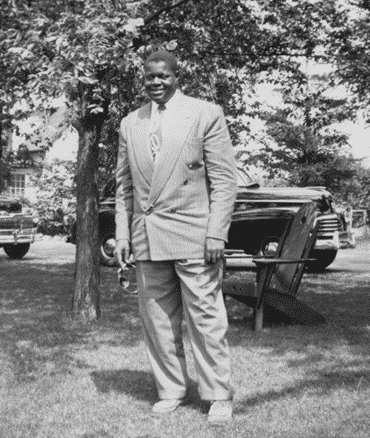
One man knew how affliction led to hope, not just for himself, but for many.  Despite our society saying otherwise to him, he was determined endure for the sake of his faith, and even the United Church of Canada. The Very Rev. Dr. Wilbur Howard is a name you might not be familiar with, but to many who knew him, he was unforgettable and inspired great hope! Dr. Howard was born on February 29, 1912, in Toronto, a leap year baby. Like many African Canadians, his father and brothers worked as porters on the railroad, for low wages and long hours.  They were often called “George” instead of their real names, and were banned from the union until they founded their own. As a child, Howard was invited to go to the United Church by a neighboring white family and went faithfully for the rest of his life.  He discovered that he was called to be a minister but racism was rampant.  The Canadian Armed Forces were just starting to accept people of African origin as soldiers.  While the rest of his classmates went off to preach in churches during the summer, Howard was sent to a church camp as a counsellor, even though there was a dire shortage of ministers due to conscription. In 1941, when Howard was 29, he became the first Black person to be ordained in The United Church, but for the next 24 years, no one would take him. Instead, he was administrator for a Boy’s organization similar to the YMCA, and edited Sunday school resources, including the controversial New Curriculum of the 1960s. Then, in 1965, at the age of 53, he finally got the call — to team ministry at Ottawa’s Dominion-Chalmers United.

Howard worked hard for the church and for Canada, often focusing on children and youth ministries.  He was also a member of the Refugee Status Committee for the Federal Government. He was President of the John Milton Society for the Blind in Canada, and Chairman of the Ontario Advisory Council on Alcohol and Drug Concerns. In 1974, Howard became the first, and to date only, Black Moderator of The United Church of Canada. In 1991 he was received into the Order of Ontario and in 2001, he  passed away.

The Broadview Magazine article written in 2018 said:

“He … exhibit[ed] a renowned wit. When elected moderator, for example, Howard quipped, “They had to decide when the commissioners vote ‘Black’ on the ballot whether they meant John Black [a fellow nominee] or me.” Some say this sense of humour is what helped Howard cross racial boundaries.

“He had a respected place in the life of the United Church. And if there were some congregations that didn’t choose to give him a chance, he didn’t dwell on that,” says Very Rev. Bruce McLeod, 89, who served as moderator before Howard and knew him well. “He was a private person. He certainly wasn’t a crybaby. He wouldn’t appreciate his story being used to say, ‘Oh, wasn’t that awful about Wilbur Howard.’ He wouldn’t appreciate that because he didn’t think it was that awful.”

But this isn’t the only opinion that exists on Howard’s silence. “I can see that he had been bruised in terms of racial prejudice and that there was a vulnerability there,” Douglas Lapp told the Globe and Mail after Howard’s death. “Maybe that was why he was so private.””

Talk about affliction producing perseverance! It must have been hard to be both a respected leader of a large denomination and also a person who faced racism on a daily basis.  And while Howard didn’t dwell on it, other ministers have been speaking out about how it is still difficult to this day.  That same article said “Rev. Marlene Britton … moved to Canada from Barbados in 2013 and first settled in Alberta. During her search for a ministry position, she sat before a church’s three-member hiring committee and took part in an interview that she felt was normal. She was later told she did not get the job because the committee thought the congregation was not ready for a woman. But a few months later, she learned the same congregation had hired a woman — and the new hire was white”  Rev. Paul Walfall, also from Barbados, who has preached in this very church when he was president of Alberta North West Conference, spoke out at the last General Council three years ago about the racism that he and other ministers were experiencing not just from Canadians but from the United Church.  For this year’s meeting in Calgary, all commissioners had to take rigorous training on equality, diversity and equity, with six facets: Challenge Assumptions, Question Biases, Notice who’s missing, Value All Voices, Aim for Equity, Live Out Our Commitments.  Each of these is thought-provoking and not something we can find quick fixes or easy answers for.  They may even produce some affliction while we wrestle with how to nurture hope for everyone in our communities of faith in the future.

Rev. Walfall also has spearheaded an ambitious project, “Here from the Beginning”, a travelling exhibition that quote “showcases the contributions and experiences of Black people within the United Church, amplifying voices that have long been overshadowed by the dominant narrative. This is a celebration of faith, history, community and The United Church of Canada.” End Quote.  It will be unveiled in Edmonton from July 27 - August 2 at Pilgrim United Church before travelling across Canada as part of the United Church’s commitment to becoming an intercultural church. If you are in Edmonton, please check it out.

The many stories of people like Walfall, Britton and Howard can inspire us and help us also live into a deeper commitment to being intercultural, to being more aware of our assumptions and more curious about those who are missing in our pews. They show us the spirit of Truth and how it really does lead to great change.  Howard did not father any children, but in some ways he fathered a deeper understanding of what it means to persevere in the face of great injustice, and his example can inspire hope for us all in these dark times.  “And such a hope does not disappoint, because the love of God has been poured out in our hearts through the Holy Spirit, who has been given to us.” May this be so for us all!

November 12, 2024

Curiosity over Criticism

This past week people have been going through a rollercoaster of emotions as we process what happened in a different country.  This is probably the only time where someone else’s politics have led me to the brink of preaching a sermon that is peppered with F- bombs!  For those people who believe that women deserve to be treated with respect and equality, for those who believe that no ethnic group deserves to be called garbage or accused of stealing and eating pets, for those who believe that joking about putting women in front of a firing squad because of a difference of opinion, for those who believe that immigrants are humans not problems to be returned en-masse to countries that may abuse them, for those who know that 2sLGTBQIA+ people are not choosing an alternative lifestyle, Tuesday was a day of fear for many.  It felt that all our work towards a society based on human rights for all, for respect and dignity, had been wasted.  And many people worry that the same political tactics that worked in the states will work here in Canada as it already has in Alberta.  Tactics of focusing on fear and scarcity and how things aren’t the way we think they should be.  Tactics of talking about how hard done by we are, how the future is uncertain, inflation is scary, jobs are threatened, and let’s target the most vulnerable people for our fear and wrath.  Those unnamed and unknown others, you know, ‘those people’, them, they, that we tell stories about to prove that the world is in danger and they are the ones at fault.

It deflects people’s attention away from harder conversations that some politicians are uncomfortable with.  Harder conversations because they are complex and address issues that have no clear solutions. Why talk about the war in Ukraine or climate change when I worry about paying my rent?  Why talk about gender equality or racism when it’s easier to talk about how dangerous the homeless are?  Why talk about the state of education when I can’t go buy a bag of groceries for under $100 the way I used to?

And then there’s healthcare. Last week we had 591 cases of Covid reported in Alberta, 313 of them taking up valuable hospital beds and doctor and nurse time. 15 patients are in ICU, and 4 people died last week from Covid.  Since August we have had 4,462 covid cases, and 119 people died. Athabasca Hospital declared a Covid outbreak on one unit on Oct. 17, 2024.  Four days later, Northern Lights Regional Hospital in Fort McMurray also had an outbreak.  On the bright side, both outbreaks have cleared, and about 20% of Albertans have gotten their Covid booster shots this month.  But it was hard to find these stats.  It was hard to find out how many hospital beds were being used for Covid patients when they could have been used for other medical situations. The statistics were buried in the Alberta HealthCare website.  Shouldn’t this be something we know about and hear in the news?

We talk about politics the day before Remembrance Day because it was fear and scarcity and inflation that Hitler used to get elected in Germany.  It was that kind of rhetoric of “Us vs Them” that he used to set up his internment camps where millions of Jews, thousands of LGBTQ individuals, the physically and mentally disabled, Roma (gypsies), Poles and other Slavic peoples, Jehovah’s Witnesses, priests, clergy and members of political opposition groups were experimented on and murdered.  Nazis first practiced involuntary euthanasia on hospital patients with mental and physical disabilities, people that they decided did not make a valuable contribution to society.  This was ‘us vs them’ rhetoric and justified for a variety of reasons.  When we say, “Lest we forget” tomorrow, let us not say it glibly.  Let us remember why Canadians and allies went overseas to kill other human beings.  They went to fight totalitarian governments.  They went to fight racists.  They went to fight people who believed in dehumanizing those who didn’t have the same ethnic roots as they did.  They went to stop a power-hungry megalomaniac who thought his ideas of racial purity could justify brainwashing and euthanasia.  They went to stop this kind of thinking and this kind of politics.  This “us vs them” thinking.

Jesus rejected “us vs them” thinking.  Jesus rejected racism and assumptions of superiority.  Jesus rejected snobbish attitudes that suggested some people should have the privilege of power over other people.  But Jesus didn’t just point his fingers at the religious and political elites of his day. Jesus was preaching to us!  We think “Us vs them” too!  Them republicans, them Americans, them racists, them homophobes.  Jesus rejected it all.  Jesus challenged our tendency to think that we are right and people who think differently than us are wrong.  Jesus rejected our own addiction to power and control. Jesus rejected our tendency to shame, blame and judge others.  We find it easy to go about fixing, saving, advising and correcting others.  Jesus rejected that too.

“You have heard it said, 'Love your neighbor-but hate your enemy.'  But I tell you, love your enemies and pray for your persecutors.  This will prove that you are children of God.  If you remember that your sister or brother has a grudge against you, leave church at once and go to reconciled with them.”

How do we love our enemies?  How do we reconcile with people we have a grudge against? By being humble!  We have got to stop thinking “we” know all the answers, and “they” are wrong, stupid or evil.  That’s hard, I know.  Building trust starts by being curious first and foremost.  By wondering why they have the opinions they do.  By learning how to not overreact to their anger, which for many of us takes time, practice and counselling from professionals.  By listening to them without judgement, which I know is hard.  By taking care of yourself when it’s too hard and do your own humble healing.

Tomorrow we will hear lots of speeches about “Lest we forget”, a reminder that people died so we can live in peace.  But Peace doesn’t come easily.  And it doesn’t come if we instinctively react with fear and anger.  Curiosity and humbleness will help us understand why the politics of our time seem so ugly.  Curiosity and compassion and empathy are the tools to help us prevent future totalitarian states in our country.  Some of us are able to roll up our sleeves and listen deeply to those who have opinions different than our own.  Some of us need to take care of ourselves and heal our own deep wounds.  Some of us can step up and speak up.  But first and foremost, let us never forget that Jesus, the prince of peace, calls us to choose the way of curious compassion above fear.  Every day!    Amen.


September 10, 2024

Asking Questions


One of the hardest things a woman can do is ask questions when she doesn’t like the answers she’s hearing.  It’s even harder if she is from a different ethnic background than who she is talking too.  If she’s poor or desperate, or not fashionable or not pretty, it’s even worse.  Women are not supposed to be uppity, they are not supposed to be loud, and they are definitely not supposed to be demanding or insistent on their rights. 

The Syrophoenician woman was everything she was not supposed to be.  Wrong race, wrong gender.  Brazenly talking to a man without her husband present, which meant that she probably didn’t have one.  Advocating for a child who also was female.  Bold enough to not take Jesus’ refusal personally, and to keep asking for what she wanted. 

This is a hard scripture, and it is one that many people struggle with.  Why did Jesus sound so sexist and racist?  We don’t need that in our fragmented world.  We don’t need women’s voices being shut down, we don’t need women’s opinions being treated with disrespect, we don’t need women’s requests for health care being dismissed or disregarded.

Right now, in this world, women who are working in politics or who are environmental scientists, or who are elite athletes that don’t look stereotypically female are getting attacked through comments, social media posts, and even murdered as seen in the case of the doctor in India, the Olympic marathoner in Uganda or the Turkish-American woman shot by Israeli soldiers. Indigenous women are still disappearing in Canada. Teenagers are at risk of losing their access to sex education in Alberta while cases of sexually transmitted diseases are growing, not to mention what might happen if Covenant Health takes over all hospitals.

We could go on and on with examples, but where is the Good News for us in this scripture?  It does not appear to be supportive of a woman’s right to ask for help without getting push back.  Except that the Syrophoenician did, and she got results.  She challenged the status quo and got what she needed for herself and her daughter.  She got the attention that made for real change. 

Her story was unusual and no wonder it was recorded.  And maybe just maybe she knew Jesus’ story.  Somehow, despite not having an instagram account or a snap chat or facebook or tictoc, she knew about Jesus and even though he was hiding out in a city outside his home country, she reacted the same as some folks here might react if they found out Taylor Swift was visiting next door.  She barged in without permission.  Not to get an autograph, but to get a healing.  Maybe she knew the same scriptures that Jesus did.  His bible had many stories of the importance of taking care of widows and orphans and even foreign women.  Maybe she knew the stories about Elijah healing a foreign widow’s child, or Elisha who saved a widow’s children from being sold into slavery because of debts.  Maybe she had read the teachings of Isaiah, Jeremiah, Ezekiel, Malachi and others about how the God of Israel taught that children and widows were to be protected and treated with respect and hospitality.

Jesus pushed back.  Why, we don’t know.  Was Jesus grumpy?  Was he tired and here was someone interrupting him on his holiday? Was he racist?  We don’t know his thinking.  Or maybe this was an opportunity to show his disciples how to go beyond racism.  This event became a lesson of radical inclusion that stuck, and the disciples changed and got over their stereotypical assumptions and chauvinist attitudes.  God was not just for the Jewish people, and God certainly was not just for men or priests or scholars.  God was for everyone!  Everyone deserved to hear the good news that God was ready to change the world for the better.

Our bible states right in the first book that God created all humankind, male and female both in God’s own image.  All humans are.  And there is a thread of women empowered by God to make a difference.  Eve chose knowledge over ignorance, Miriam lead worship with her brother Moses, Deborah was a Judge of the Israelites before there were kings.  There’s Ruth and Ester and Mary who were leaders that spoke out against the status quo.  Women have been speaking out ever since.

Who are the voices we are not hearing from?  Who are the people wanting to be included in God’s community?  There are many who feel isolated or depressed.  News articles abound about the epidemic of mental illness.  One of the prescriptions given is to find a community, but people are reluctant to look for one.  One woman said, “I’d come to church if I knew there was a church that wouldn’t mind me asking questions.  Another person said they didn’t dare come to a church because they knew they would be judged.  Someone else said they were badly hurt by a congregation’s power struggle, or a priest’s cruel remark.  They expect a church will judge them because they have had that experience in the past.  They have been hurt badly.

Our job, like Jesus with the Syrophoenician woman, is to listen and encourage.  When we understand where people are coming from, we can be an agent of healing for them.  It makes a difference.  It made a difference for the Syrophoenician woman.  Tyre developed a congregation that was strong and proud to associate with Paul and the other disciples, and in Acts was mentioned as one of the earliest churches founded by Jesus.

When we, like Jesus, listen with curiosity and let go of our prejudices, amazing acts of healing occur.  God is still healing the ones that are hurting, God is still loving those who are full of despair and God is still speaking to those who are questioning.  Thanks be for a God who loves questioners! Amen.

August 22, 2023

The Outsider Woman: Matthew 15:10–28

Sometimes, all it takes is the lift of an eyebrow to challenge what someone else assumes is a truthful statement.  This sculpture of Mabel Gardiner Hubbard shows her lifting her eyebrow skeptically as if to say to her husband, “do you really believe in the nonsense you spouted just now?”

She was a feisty and intelligent woman who helped propel her husband to fame.  She also lived with a profound disability after developing scarlet fever as a child.  That disease destroyed so much of her inner ears that she not only became deaf, she lost her sense of balance and could not walk around at night without falling over. 

Despite her disability, she learned to read lips and speak several languages so well she could pass for a hearing person.  Mabel became a businesswoman, an entrepreneur, and so well known that her sculpture is in this park in Canada.

She wouldn’t take pity and she didn’t shy away from debate or learning.  And she had the kind of character that wasn’t afraid of speaking truth to power.

Remind you of anyone?  It’s easy to put her in the scene with the scripture reading from Matthew.  A woman, one of the dreaded Canaanites who had been at war with the Hebrew people since the time of Abraham and Moses, came to Jesus to ask for help.  Her pleas fell on deaf ears.  No one heard her, acknowledged her, pretended she was even in the same place with her.  Rather like the pan handlers found near tourist sites, she persisted in her calls for help.  No one wanted to make eye contact with her.  They probably all turned their backs on her rather than listening to her.  Nevertheless, she persisted.

Eventually, and doesn’t it almost sound almost reluctantly, Jesus engaged this outsider woman.  As a rabbi, he didn’t have to talk to this Canaanite, he didn’t even need to show her respect.  The easiest thing for him would be to have one of the disciples make her go away, or even simpler, move elsewhere until she gave up.

Lots of articles have been written about this story – was Jesus racist?  Or was he acting out a living parable to teach his disciples a lesson in radical acceptance?  It’s easy to take either side of that debate, and there is no conclusive evidence either way.

One thing that does stand out is the woman’s humbleness.  So often when we engage with someone who has a different opinion than us, we can quickly get defensive and angry.  When we don’t get what we want, we feel personally betrayed and disrespected.  Business experts and social scientists alike are raising concerns about the level of animosity in our society these days, and how social media seems to prevent honest conversations and understandings.  It’s far too easy to get caught up in fights online, and churches are not immune to this.  It is easy to type something at someone that we would never say in person.  And the level of conflict in our culture at this moment is so bad that everyone from politicians to journalists, jurors and judges are getting used to death threats and abusive language. 

It’s in our own neighborhoods, it’s in places where people have lost their homes to fires, it’s in places where people are waiting to return home. It's around dinner tables when global warming is being discussed, it’s in classrooms where concepts like neo-liberalism or political correctness is being discussed.  It’s in stores who have people pitching their tents on sidewalks in busy cities, and it’s on walls in Winnipeg covered in racist graffiti.  We don’t know how to take feedback without getting upset and we give feedback when no one has asked for it.

Jesus and the Samaritan woman had an encounter that could have become a terrible fight.  Jesus said something that was dismissive at best and confrontational at worst.  But the woman didn’t care.  She didn’t let the insult keep her from asking for what she needed.  She didn’t get on her high horse or go off in a huff.  She acknowledged that he might have a point, but her daughter’s health was more important than picking a fight or getting her feelings hurt.  She would do whatever it would take to help her daughter heal.  She didn’t take Jesus’ comments any more personally than the comedians on the radio show, “The Debaters”, which if you haven’t heard it, is worth a listen.  She probably lifted her eyebrow at him when she retorted, “even the dogs get crumbs.”

She knew that when we meet someone with different opinions than our own, it can be a moment for growth if we don’t let our egos get in the way.  And the other person’s point of view may well hurt our egos a little bit when we hear their story. 

But one piece of this story is where Jesus was.  He was not in Jerusalem or even Galilea.  He was in Sidon, a city in Lebanon, founded by Canaanites.  In other words, he was on her land.  Did he go there to hear other points of view?  To teach his followers, as Paul so eloquently put it, “there is no difference between Greek or Jew, all have the same Creator.”  This would be a lesson that they never forgot.  They were called to heal all who came to them, to have conversations with all even when they looked, sounded, or acted differently.

They were to enter into conversations humbly, and ready to have their most basic assumptions challenged.  Like the sculpture of Mabel Gardiner Hubbard, the women they talked to would challenge their stories, their theology, their assumptions about their place in the world and their understanding of God.  Most people have no idea who Mabel was.  But they all know the man in the sculpture, her husband whom she made famous.  Mabel pushed him out of his comfort zone by buying a train ticket for him and packed his bags and his latest invention and took him to a fair.  The invention changed the lives of us all.  That invention was the telephone, and her husband was none other than Alexander Graham Bell.  Without her contrary point of view, our world would look much different today.

There are times when we have something as urgent as a world-changing invention or a family member struggling with mental illness.  We may have to lift our eyebrows at people telling us we don’t need or deserve help.  And there may be times when we have someone come to us who needs our help and won’t take no for an answer.  May we recognize in those times that we are all God’s children, and pray so we can humbly hear each other into deeper understanding and deeper healing for us all.  Amen.


June 13, 2023

Being invisible

There’s a picture book about a kid who feels invisible.   Every day Brian goes to school, and no one notices him.  He draws pictures that nobody sees, and he eats lunches all by himself and no one picks him to play on their team in gym class.  Even the teacher doesn’t see him, and he feels safe that way.  Then a new kid moves to town and gets laughed at for bringing his favorite lunch to school.  Brian thinks it’s worse to be laughed at than to be invisible, so Brian draws a picture with an encouraging note and leaves it where the new kids will find it.  That’s the day things start to change.  The new kid starts to see Brian and treats him with the same kindness Brian showed in his note.

There are days when we may feel invisible.  And there are days when we feel like we are living under the spotlight.  The election has spotlighted a whole bunch of people who we may never have heard about before they ran for power.  There are people in our world who are terrified of being invisible, of not having their votes and their opinions count.  There are a couple of fundamentalist churches in Canada who are quietly working to make our country more restrictive, with a racist and homophobic agenda to elect politicians and influence both educational and judicial systems, according to a CBC research report.  They want to work invisibly to have their political views imposed on all.  There are others who desperately want to be in the spotlight, they crave the attention they get when they make controversial statements and end up in the media.

I wish I knew what the answer was in our argumentative world where we are all struggling to breathe, never mind argue over who is better than whom.  When the smoke from our forest fires reaches all the way to New York, surely we should all be working together to save our environment?  But no, let’s get upset at how an oppressed and generally invisible minority uses paint in public so they can feel seen as is what is happening in Westlock this week.

Maybe that was the same feeling the Pharisees had when they saw Jesus talking to the tax collectors. People like Matthew would have been seen as irredeemable by the religious scholars of the day, a lost cause, and worthy of being treated as if they were invisible.  And no one asked the question of why they chose such a career that made them invisible in the first place?  Why were tax collectors so shunned?

When we think of traitors, World War 2 comes to mind, especially after the June 6 commemoration we observed this week.  Did you know that for months after the troops landed on Normandy beaches on D-Day, some 20,000 women in France were forcibly attacked by men, often French men, and had their hair shaved off?  This was done so everyone knew that they were collaborators with the Germans.  The shaving was not part of a legal investigation, or a Truth and Reconciliation hearing, but a vigilante action by men wanting to prove their loyalty to France.  Like the medieval witch hunts centuries before, the women who were targeted were often single, widowed or with husbands away in a prisoner of war camp.  Invisible women that no one would protect. No one asked them if they had collaborated or why they had collaborated.  Sometimes they were punished or even killed simply because someone said they saw the woman talking to a German soldier in public.  It’s an ugly and invisible part of the aftermath of the liberation that happened across Europe.  As one novelist pointed out, many of these women had no choice.  The Germans would invade a town, pick out the nicest houses and force the inhabitants to serve them unquestioningly day and night.  If the woman had children, the officers would threaten the children to ensure obedience. 

Going back to Matthew the Tax collector, why was he seen with such disdain? We don’t think of Canada Revenue Agency workers in the same class as collaborators and traitors, though we may like to grumble at bloated government departments and overpaid federal employees; maybe we even make sweeping generalizations about invisible people we may never meet in person.  The tax collectors in the time of Jesus were seen as traitors working with the Roman occupiers.  Not worthy to be seen by Jesus.  Nor were women who had hemorrhages.  They were not to be seen during their monthly menstrual times.  They certainly weren’t supposed to be sneaking out in public to grab the fringe of Jesus’ cloak!  And a little girl who was dead was also seen as unclean, something a good rabbi should never touch.  If Jesus had been a proper religious expert, he would have ignored all three of these kinds of people.  He would have treated them as invisible.

But Jesus didn’t just see Matthew and his co-workers, or the sick woman, he called them to join his new community!  Just as God didn’t just see Abraham in his crowded city, God called Abraham out of safety to start a new society.  Abraham was invisible to his father’s culture as a second-born child who would inherit nothing and would have had nothing to lose by venturing out into the wilderness.  Abraham brought invisible people with him, a wife that had little say in where he would go next and brought who knows how many unnamed slaves.  The country he moved to had invisible people already living in it.  Even though the land was occupied, God chose that Abraham’s family would inherit it, not the indigenous people.  Suddenly this is not a comfortable scripture, but one to be wrestled with.

Still, the tension of who is seen and who isn’t is important to reflect on.  Who do we choose to see?  Who do we wish were more invisible?  Do we feel invisible like Matthew, but are we truly invisible? Do we ask ourselves who God calls us to see? Do we crave the spotlight or crave invisibility?  Do we have the courage to hear God’s call to us, regardless of who we are, to see others as Christ sees us?  Is our church invisible or seen by all? Are we ready to risk being a bold visible community that welcomes all? And how do we do that? 

Through deep spirituality first and foremost.  Spiritual practices, prayer, humbleness, intentional times to think about our faith and our call will build the deep empathy and resilience that we need.  Then we can practice bold discipleship where we take courageous steps to welcome the invisible and bring healing good news to those who are hurting. And lastly, we can choose to heed the call to step into the spotlight that daring justice needs, in order to heal God’s beloved creation. Like Abraham, we are called to go into an unknown world which needs so much healing.  Like Matthew, we are called to new communities of faith, like Jesus we are called to help the invisible be seen.  May God bless us and keep us on this journey we are called to be on.  Amen.

June 21, 2022

Over, Under

 When I was a kid, the ultimate test of friendship was the teeter totter on the playground.  Unlike a swing that one person could power all by themselves, a teetertotter needed cooperation to make it work.  If you picked the right partner.

Too big and you would end up suspended up in the air, looking a little silly, and not able to pull your weight in the game of up and down.  Too small and you would end up on the ground and the other person would be the one looking silly. Then there were the extra long teetertotters that could accommodate more than one rider.  We didn’t know we were learning physics or even math in trying to end up with balanced sides.  And wasn’t it wonderful to have a kind teen or adult that would be at one end who could bring us up and down single-handedly?  Teamwork, co-operation, equality and trust were all required.  I remember feeling sad when I got to be too big for my dad to single-handedly lift me on the teetertotter, but by then he was introducing me to the mysteries of catching a ball in a big leather glove.

Teetertotters are often how we view our relationships with others.  Are we on top?  Are we higher than everyone else?  Who has got the power? Anti-bullying educators talk a lot about power and how there are a lot of people striving to have power over other people.  And there are a lot of people who are in situations where they feel like they have no power and feel bullied and depressed.  We know of children who die by suicide because the only power they feel they have left is the power to take their own lives.  Anorexia can be an attempt to find power and talking to addicts and alcoholics I hear the same kind of language, “no one is going to tell me what to do!”  There was a story this week of a Calgary Heart Surgeon who is retiring and has filed a complaint against Alberta Health Services. Why the complaint and why only once retirement is happening? Well, she is the only female heart surgeon in Alberta, and has faced microaggressions, gender bias and outright discrimination throughout her career simply because of her sexuality.  No wonder other female doctors are avoiding becoming heart surgeons!

It's easy to blame toxic masculinity for the competition over power that some say has been with us since the overthrow of mother goddess worship in ancient Europe.  Jean M. Auel, author of the Clan of the Cave Bear series, hypothesized that once men realized that they had something to do with the babies being born by women of the tribes, they became possessive and controlling over who had access to the women.  But I think it’s even more universal than that.  Women can be just as invested in the battle for power, and the worst bullies I had as a child were the girls who made some pretty cruel comments, or even worse, jumped off the bottom of the teetertotter when I was up high in the air.  I came crashing down, bruising my ego and my trust as well as my tailbone.

Toxic lust for power can be seen everywhere we look.  It’s at the heart of the invasion of Ukraine and the January 6 insurrection at the White House, and the Ottawa Convoy where protestors made noise and garbage for over three weeks.  It’s at the heart of the current run for party leadership of the United Conservatives in Alberta.  It’s at the heart of family violence, abusive relationships, racism and homophobia.  It is even at the heart of how we talk about the homeless in our community in Athabasca.

We want power over because we want to feel safe, to feel in control, to feel competent or important.  And we have historically done whatever we could to feel that power.  We put people like my great-grandmother in Bedlam under horrific conditions or locked them in chains in a graveyard to deal with their chaotic mental illness.  Is there a better, more humane way in which to address this toxic culture we live in?

Some folks have traditionally thought all that was needed would be to give power to the powerless, to give guns to victims or karate lessons to scrawny children.  Give a radioactive spider bite to a weak teenager, or a magic wand to a boy forced to live in a closet under the stairs.  From Spiderman to Karate Kid, the theory has been to give power to victims and that will fix society.  However, studies of bullying in classrooms show that when a bully and a victim are separated without any other interventions, the bully quickly finds another victim, but surprisingly the victim will often find another kid to become a bully!  Or the victim becomes a bully themselves, taking a turn on the teetertotter.

Jesus sidestepped the power over-power under teetertotter completely and frequently.  It’s seen very clearly in his approach to the Gerasene. He didn’t respond by bullying, putting more chains on the man, or responding like a victim, reacting with fear.  He connected with engagement and respect.  With questions to learn more.  And with authority and confidence.  But not with intimidating, controlling, blaming or shaming.  And he rid the man of the power that was bullying him, driving him to drastic behaviors. 

When people say that the world does not change, they are wrong.  I drove around Athabasca looking for a teetertotter in a playground and couldn’t find a single one at WHIPS, LTIS or the riverfront.  The world changes.  We can change too.  We may not send demons out of people as dramatically as Jesus did.  But we can face our own inner demons, the urges that demand we grab power over, or even the fears of being dominated by others power, and claim our identity as children of God who called to be freed from the tyranny of our own bullying and victim urges.  We can become sensitive to power dynamics at the root of sexism, toxic masculinity, racism and homophobia.  We can be healed and healer, committed to balancing the teetertotter of power with everyone we meet.  We do this with God’s grace and love; knowing that healing is real, change is possible and new life in Christ will make the world a better place for all!


April 19, 2022

The amazement continues!

When I was a teenager, I stumbled upon a book in my dad’s collection with the provocative title, “The Sacred Mushroom and the Cross.”  A lot that was in it became the inspiration for the book that inspired the Da Vinci Code, and was excellent fodder for a budding young atheist like me.  John Allegro, the author, wrote that the Jewish faith was based on an ancient fertility cult that worshipped hallucinogenic mushrooms.  These mushrooms were talked about in codes that supposedly became stories of the risen Christ.  The mysteries of the empty tomb were caused by the disciples eating the mushrooms in a sacred meal before Jesus died.  And there was no Jesus.  Just mushrooms.

Jesus did not exist, wahoo, I could stop wondering about the Easter experience and get on with my life.  Except that there were inconsistencies with his logic and renowned biblical scholars thoroughly discredited his conclusions, rather like Eric von Daniken’s Chariots of the Gods which claimed humans were too stupid to design pyramids.  Jesus was back in the picture.

And I’m suspecting that I’m not the only one who has lived through the yoyo of theories of who Jesus was, how real he was, and how real the resurrection was.  Theories go in and out of fashion, debates rage in the media one moment then are forgotten the next. Albert Schweitzer wrote about the fashion trends in thinking of how we interpret Jesus.  We also yoyo between seeing Jesus as a mortal, flawed human walking the earth during a tumultuous time and Christ, the word of God made flesh, somehow more than just human.  But Jesus is more complex than the latest trends.  And if we believe Jesus was special, how do we relate to other spiritual traditions and paths that don’t see Jesus the way we do?  Colonialism and racism can seem like a natural offshoot of Christianity if we assume Jesus is the only way to God.

It doesn’t have to be that way.  We can have a healthy understanding of Christianity beyond colonialism, beyond racism, and even beyond literalist understandings of who Jesus was.  Paul, I think hit it on the nose when he said that we Christians are most to be pitied if we only think our faith in Christ is about getting the best in the here and now for ourselves.

It’s that bold statement that all will come alive in Christ Jesus that I have seen happen in so many people.  When we remember the core teachings of serving, loving, and respecting our neighbors, when we care about others as much as we care about ourselves, when we do our best to follow in the footsteps of Jesus and the disciples, we do find our lives full of meaning, vibrancy, community, and love.  We find healing for our tough times, and courage for the scary times.  We find strength for the times when we feel uncertain, and support when we feel unsure.  We find inspiration and wonder when we come face to face with the mystery that is the Easter story.  We find that we can still be amazed when we discover the surprises that God has in store for us.

It’s easy to become cynical and dismiss much of what we see and hear as nonsense.  It’s easy to give up on hope.  Especially when we see so much tragedy in the news, so much selfishness, so many people solving their problems by taking a gun out into a subway or invading a non-aggressive country.  The arrogance of billionaires who think they know everything about free speech and can use their money to influence culture in the way that they think best. But Christianity challenges that cynicism and despair.  It's not for the faint of hearted.  It’s not for those people who want easy answers or quick fixes to the immediate problems they face.  But it is a grand adventure that heals the broken hearted, inspires bravery and courage, reaches out to those who need compassion and healing and grows community. 

We have a crazy hope.  One rooted in ridiculous claims that seem like nonsense.  And yet, and yet, more than the discovery of chocolate eggs, more than the emptiness of living from paycheck to paycheck, following in the footsteps of Jesus, being open to the possibility that there was more to Jesus than just a storyteller with a few tricks up his sleeve, gives hope and meaning to our lives if we so choose. 

Easter is an invitation to a grand experiment that is still going on.  An experiment in living as if death has been defeated, living as if nothing can ever stop the compassion and love that our loving creator wants to gift us with.  Easter is a surprise waiting to burst open our hearts just as Jesus burst out of the empty tomb.  This Easter, what will you experiment with?  Who will you serve with compassion?  Who will you forgive with love, who will you inspire with hope?  Who will you reach out to with good news?  Who will you ask forgiveness for?  Who will you hold in prayer?

All will be made alive in Christ.  Not just you, not just me, but all in God’s world.  Jewish, Muslim, Hindu, Buddhist, atheist, all are on a journey of discovery.  Together we are invited to discover that:

We are not alone, we live in God's world.

 We believe in God:  who has created and is creating, who has come in Jesus, the Word made flesh, to reconcile and make new, who works in us and others by the Spirit.

We trust in God.

 We are called to be the Church:  to celebrate God's presence, to live with respect in Creation, to love and serve others, to seek justice and resist evil, to proclaim Jesus, crucified and risen, our judge and our hope.

In life, in death, in life beyond death, God is with us.

We are not alone.

    Thanks be to God.

March 01, 2022

Transfiguring Freedom

 In 1925, the same year that the United Church was founded, a baby was born to immigrant parents in Montreal.  Not terribly unusual, it was a big family, and there were already three other children and there would soon be a fifth.  The baby’s father was a porter on the railways and would regularly travel from Montreal to Vancouver for the princely sum of $90 a month.  The mother earned $5 a month as a housemaid.  It was barely enough to make ends meet, and many times the children stayed in bed because their parents hoped they would sleep through their hunger.  They were one of the poorest families in the neighborhood.

But that poverty did not define who they were.   They were committed to two things; Union United Church, the oldest Black United Church in Canada, founded in 1907, and music.  Every Sunday they would go to church, sing the hymns and play in the community band.  The dad had taught himself to play the piano and to read music and he was determined to teach every child the same thing.  As soon as the older kids were good enough, they became the teachers of the younger ones.  Hymns and classical music were what they learned, and woe betide the child who didn’t practise their scales!  They started lessons when they were three years old and big enough to sit at the piano. The oldest daughter became so good at teaching her younger siblings that she eventually made a living as a piano teacher.  Music gave her the freedom to leave the hard work of being a maid, to the hard work of inspiring young people to make music.  But that fourth baby was very special.  He could play a song that his older brothers and sisters struggled with, just by hearing it once.  He didn’t even need to see sheet music to play it.  He loved playing trumpet in the band until he got so sick with tuberculosis that he spent more than a year in hospital.  He never played trumpet again.  But then he discovered jazz!  That not only transfigured his moods and his hopes but also set the stage for his future career.

And what a career.  When he was fifteen, his older sister took him to the CBC radio station without telling him why.  She had registered him in an audition for a contest which had performers much older than him trying out.  He passed the audition, and won the contest against not just all the Montreal performers, but all Canadian musicians as well!  By the time he was 20, he performed to a sold-out crowd in Toronto’s Massey Hall, and by the time he was 24, he performed in Carnegie Hall.

He also struggled.  Barbers in Hamilton refused to cut his hair because he was African Canadian.  A white teacher in his elementary school called him racist names.  One of the bands he played in was banned from a Montreal hotel because he was their pianist.  When he became famous after his Carnegie Hall debut, he went on tour in the United States, and discovered that in the southern states, restaurants wouldn’t serve him, hotels wouldn’t let him stay with the rest of the musicians, and once the room he slept in had no bathroom but only a bucket of sand for a toilet.  With so much hatred targeted at him, he delt with the stress as best he could, remaining the polite Canadian he had been taught to be by his family and his church.  It was while on one of those tours that he was encouraged to write a new piece of music with a bluesy feel to it.  He called it “Hymn to Freedom” and it became the unofficial anthem of the Civil Rights Movement. A Canadian Song!

Now, I don’t know about you, but freedom has become an uncomfortable word in recent days.  It has been used to promote an extreme agenda, and equates temporary measures put in place for the common good of the community with oppression and dictatorship.  It was used to shut down awkward questions, and to accuse people who have differing opinions as being pawns in a supposedly increasingly totalitarian state.  It was being used to justify an individual’s desire to do whatever they want.  But freedom is not supposed to be a weapon to shut down dialogue, nor is it supposed to be a justification of behavior that ignores peace, order and good governance, our founding constitutional principles. 

Freedom means many things to many people.  Now we are reclaiming that meaning as we watch and pray over friends, relatives and kin in the Ukraine and surrounding Slavic countries.  Slovakia, the homeland of my grandparents, aunties and uncles, is also in danger as refugees stream across its borders.  When I visited as a child, there were secret police in every village, army soldiers in every street, and art of Lenin everywhere one looked.  Freedom was not part of the constitution.  Everything was controlled by the state and those in power.

Freedom, for our musician friend was seen as the precious and transforming principle for a whole nation.  He could have been targeted for vigilante violence by drinking at the wrong public water fountain, but his music inspired folks living with systemic, widespread and brutal racism to have hope.  His music transformed them as it had transformed him.  Just as God transformed Jesus on the mountaintop, revealing him as someone who was even more powerful and inspiring than the disciples guessed. Both men, Jesus and Oscar Peterson, knew that transforming the world so more people would know true freedom, would be hard work.  Both men worked hard for it even though they knew they wouldn’t see it come true in their lifetimes.  Both were determined to make a difference in this world, no matter the sacrifice, the personal cost.  For Jesus, it cost him his life, for Oscar, his personal life was a mess, and his physical health was not great either.  But he left an amazing legacy.  I found his piano course in a music store in New York, of all places.  He started music schools and taught the next generation how to play jazz and Bach both.  He challenged racist commercials on CBC.  He encouraged musicians to join AA and give up drugs.

And yet, when the top two jazz musicians in the world worthy of being mentioned in the Alberta government’s first draft music curriculum for Grade Six were announced, one was Glen Miller of “In the Mood” fame, and the other?  Not Oscar, not even local musician Tommy Banks, but Mart Kenny who didn’t even live in Alberta, and only recorded two records to Oscar’s 200 recordings spanning over 60 years, 7 Grammy awards and the first Canadian pianist to receive the Glenn Gould prize for music, not to mention the Order of Canada.  Mart Kenny’s biggest claim to fame other than the song “When I Get Back to Calgary” was being the grandfather of our current premier.  Both musicians were white, and we all know that many of the best jazz musicians were and are people of color.  So, racism is still here in Canada, sometimes subtly as in our curriculum, sometimes blatantly as demonstrated by some of the protesters in Ottawa, or regularly as related by Albertan United Church clergy of color.  And we are called to be as determined as Jesus, and as committed as Oscar Peterson, to use our privilege to challenge racism wherever we see it.  Black History month is a call to transfigure our awareness so that one day everyone will sing a song of freedom that will be true for all in the world.

November 16, 2021

When dreams are in ruins

Doomsday.  It’s like a car crash on the Anthony Henday freeway.  We slow down to watch the disaster or because the emergency response vehicles are flashing their lights, and it’s hard not to rubberneck as we crawl by.  Or it’s like hearing about a tornado and power outage in Vancouver.  I immediately texted my son only to find out he had not even known that the power was out for some of his coworkers.  Or like the time we were on our honeymoon in Queensland in 1987 and heard that Mill Woods, where our brothers lived and our wedding presents awaited our return, had been destroyed by a tornado!  Time stands still for a moment, disbelief is expressed, adrenalin kicks in and we do what we can to connect with our family and friends.  Our home in Mill Woods didn’t even lose a leaf off a tree that day.  But the anxiety that we endured while we scrambled to find out what had happened took a while to wear off, and we were lucky compared to some folks in the trailer park.

Now we are in times that have left many feeling anxious and isolated.  It feels like we are all holding our breaths waiting for things to go back to the way they were.  Yet so much has happened and is still happening that it is hard to picture what back to normal, or forward to new normal, will look like.

Mark was writing his gospel at a similar time of great change.  He remembered the ‘good old days’ when Jesus was teaching the disciples, inspiring, empowering and engaging them.  The times Jesus comforted them, the times Jesus provoked them.  When we hear Mark’s story, there is a lot of Jesus provoking and challenging everyone he met.  The scribes and Pharisees, the temple officials, the keepers of the status quo.  And he provoked his disciples too, much to their discomfort.  Imagine standing in a beautiful, awe-inspiring building that was the centre of the faith, and Jesus saying, eh, it’s not so great.  And Jesus was right to warn them not to worship the building.  Only 30 or so years later, it was destroyed so badly by the besieging Roman army that it would never be rebuilt and the western wall is all that’s left of what was once a glorious symbol of Herod’s ambitions.

The trauma of having the temple, with the holy of holies destroyed alongside much of the city, was devastating for the faithful.  They struggled to understand why God had allowed it to be destroyed.  Leading up to this, charismatic leaders were recruiting people to wage war on the Romans.  They had some success and wiped out 6000 Roman Centurions in one ambush.  But as the Romans started taking the insurrection more seriously, pushing the various groups into Jerusalem, the leaders started fighting amongst each other in a bloody civil war.  Jerusalem was destroyed, with a death toll of over a million, according to the Roman Historian Josephus.  So Jesus warning his people of the different leaders who would be vying for their loyalty was making an important point.  Jumping on a bandwagon because it’s led by a charismatic speaker is not what God is calling us to do.  It can lead to death and destruction.  The world is full of earthquakes and wars and famine, but we are not to be dismayed.  We are to stay focused on our purpose.

I am proud of this congregation.  We have been very steady in our focus.  When DJs urged us to protest public health legislation, we did not jump on that bandwagon.  When friends and family started sharing conspiracy theories or recommended veterinarian medication for Covid, we resisted.  When people thought it was okay to make racist comments in public and talk about making Alberta great again, we challenged those attitudes.  We wore orange feathers and orange t-shirts, we wrote letters to the editors, we started petitions to save parks, and other initiatives.  We started saying a land acknowledgement long before it was popular to do so.  I was surprised and impressed that the Remembrance Day ceremony this week started with a land acknowledgement.

Here are two stories from this week of how we  make a difference when we stick to our vision of God’s Community.  One was a family of four who came because the Friendship Centre thought we might have some winter coats to give them.  There was an eight-year-old, a mum, an auntie and a kookum, and they told me that Covid had been a real struggle for them.  They saw our basket of socks and their eyes opened wide and they were so happy to know that they could take some home.  They also took some of the food and clothes from our donation baskets.  Next time they come they will take our Jiggs Dinner that we froze for families in need.  There were other people who were treated to new socks and food this week.  People struggling with mental health or with developmental challenges.  But I will not forget the look on the RCMP officer’s face who came to collect socks for the Detachment.  I told him we had a lot, but I don’t think he believed me; he told me he’d take as many as we could spare.  Boy, was he surprised with the basket filled to overflowing!  He said that socks would go out in the squad cars so that if they had to deal with someone who was in the bush, they would have warm dry feet because of us.  And he wanted me to thank you for your generosity.

We may help prevent frostbite, gangrene, or even death amongst people who have lost hope that they deserve to be treated with care and respect.  Paul wrote, “provoke one another to love and good deeds”, and we have done just that.  Having a vision that stays the course, inspires generosity, empowers our community and engages the ones who are seen as least among us, is what we as Christians are called to do.  When we keep that vision in mind, walls are broken down, chains are thrown aside, and we all live in Christ’s vision of freedom and liberty for all.

September 07, 2021

Favoritism

Favoritism seems to be an inescapable part of human nature.  Last week we heard about how God favored Abel’s offerings over Cain’s, and Cain murdered Abel because of that favoritism.  Today, we have an uncomfortable story about even Jesus, our role model and our teacher, playing favorites.  Not only that, he calls a woman a dog.  That is as offensive today as it was back then.  Why?  Because of her ethnicity.  He judged her because of her race, and this lady wasn’t good enough.  Jesus was playing favorites.

How many times have we been the favorite?  How many times were we singled out as not being the favorite?  How many times have we shown favoritism towards someone over someone else? 

Even God seems to show favoritism from time to time, especially when it comes to the Hebrew people.   Malachi 1 has the famous quote that was turned into a novel about twins and favoritism, “Yawheh says, Yet I have loved Jacob but I have hated Esau;”

It’s hard not to show favoritism.  One of the hardest jobs as a parent is doing our best to be impartial, not favoring one child over another.  Even with the best of intentions, it can still be difficult.  One of the saddest funerals I ever presided over was a twin who had died in a car crash.  She was part of a big family, and one of the younger children.  The family was so large that she was given away at birth to another family, and that act shaped her in desperate ways.  That led to complicated grief all because of what was perceived by some as good intentions but by others as favoritism.

It’s easy to play favorites by judging appearances, or by how articulate someone is.  My grandfather, who was a travelling salesman, used to tell us that the best way to judge a person’s character was from how shiny their shoes were and how clean their fingernails were.  Again, that’s natural.  So natural, James warned his people some 2000 years ago not to do that.

That’s easier said than done.  How do we do that?  As a congregation! When we practice the commandment of “love your neighbor as yourself”, we are countering the addiction to favoritism by replacing it with the ancient art of hospitality.  Parking Palmer describes it in more modern language, calling it “giving and receiving welcome.” He says “People learn best in hospitable spaces… we support each other’s learning by giving and receiving hospitality.”

We have been hospitable in many ways.  Every time we have a guest speaker who has experienced the hurt of favoritism and discrimination, they feel welcomed and supported.  People like Thom’s choir, Phyllis when she talked about Truth and Reconciliation, Debbie with her stories of rejection by churches, and Gill remembering Amber Valley settlers.  Taking prayer shawls to the Chinese restaurants and hotel families for Asian History month.  Cooking meals for the community.  Putting a rainbow flag in our window. Holding forums on wills, estates and legacy planning.  Hosting educational events for LGTBQ and their allies.  Working with PRAAC to put in place funding and programs to tackle family violence.  Providing food, clothes and counselling for homeless people struggling with a variety of issues.  Teaching cooking lessons to low-income parents and Blue Heron members and so much more.

There’s one act of hospitality that particularly stands out in my mind.  A few years back, we had several people in town ask what we the United Church were going to do about Syrian refugees.  I went to the interfaith refugee committee to ask what they were planning and heard one person say that they didn’t think it was wise to bring Muslim people into Athabasca where we only had Christians.  They wanted to bring people in who might join their churches, and they also said they wanted to bring in refugees that were not getting attention from the media, which was a good reason.  But Syrians?

Syrians like the lady Jesus talked to in our scripture reading today, who said even the dogs deserved to eat the crumbs that fall off the dinner table.  Syrians who wanted a chance to bring up their families away from tanks, bullets and bombs.  With the invaluable partnership of St. Andrew’s Zion Church in Collinton, we brought not one or two but eight people to Athabasca, Christians and Muslims alike, and taught them how to survive Canadian winters.  We bought thousands of dollars worth of gift cards to raise money for dentist bills and school clothes, for laptops and education.  One family we brought, the Halawas, are applying for Canadian Citizenship this month, the girls are planning to study nursing and pharmacy, the son is growing up and graduating from high school and hoping to become a police officer or mechanic.  The oldest girl is now married to a husband she picked of her own free will and is very happy.  Everyone is working on driver’s licences and English is no longer a struggle for most of them.  They have jobs and they are thriving.  Why? Because Jesus heard the Syrophoenician woman’s challenge.  He let her disturb him to the point that Jesus changed his mind.  Because of her challenge, her descendants, thousands of years later, found a welcome here among us.  Because Jesus acknowledged her humanity, we too acknowledge the humanity of everyone we meet.  When we turn away from playing favorites and choose instead to empower, engage and inspire the people we meet through giving and receiving radical welcome and hospitality, we bring God’s healing into this troubled world.  May we continue to inspire and welcome those without favoritism.  Amen!