Showing posts with label honesty. Show all posts

July 18, 2026

Thorns and thistles

There’s nothing quite so satisfying as spending time in the garden ripping and tearing out the weeds. Especially dandelions choking our petunias and carrots.  Some of us weed with our bare hands, which is fine when we are dealing with chickweed, but thistles are a different matter.  Their sharp edges alert us when we get too close or handle them roughly.  They are utterly useless plants that doesn’t have a place in a civilized and cultivated garden.  Rather like mosquitos, thistles feel like something God shouldn’t have wasted time in creating in the first place.

So of course, when Jesus told a parable about a wheat field, the listeners would be confused with his story.  They would have related to the workers who are upset at the thistles growing with the crop.  Sabotaging food sources was a favorite tactic of war back in his day.  Destroying crops disrupts the food supply the soldiers depend on to defend their land from invaders.

The disciples would have been fine with the story up until the point that Jesus told of the farmer ordering his workers to allow the weeds to grow until harvest time.  Only then would the thistles be sorted out from the wheat.  That didn’t sound fair!

We don’t want to live with thistles, we don’t want to get poked and scratched by thorns.  We like labels, “this person is wheat, that person is thorn”.  We like black and white thinking, “once a thorn, always a thorn”.  We like pointing fingers, feeling righteous, judging people as safe or unsafe.  We like to imagine all the thorny people get punished in the end.  I won’t get burnt because I’m not thorny, I’m the wheat that everyone wants.  And we all see ourselves as the heroes of our own story.  That habit of judging others and congratulating myself without honest self-reflection is addicting.

Until we come face to face with God.  The psalmist wrote that God searches me and knows me through and through. God made me and formed my inward parts; God fashioned me in my mother's womb.  When everyone else was in ignorance of who I was, God knew all of me.  This set of verses has become the bedrock of many people of faith who are born two spirited or intersex.  Intersex are people born with both male and female anatomy.  About three out of every 100 babies will be born ambiguous.  There are many incidents where a doctor was called in to decide a baby’s gender and made a mistake.  Or did surgery thinking they were fixing a problem, only to cause issues for the child once they hit puberty.  Can you imagine discovering you were a boy at the age of 14?  Or a girl?  These things happen.  And scientists are also learning more and more about brain chemistry that changes how they understand gender and orientation.  The boxes we may have grown up with as children are found to be dangerous to those who don’t fit them.

Jesus touched on two things.  That the community of God was to wait on judging and let God do that.  Because we humans are quick to judge.  We’re fast to put people into boxes.  God says, let everything grow and in good time we will have justice.  But justice without mercy can lead to dreadful consequences. A community of faith can end up pointing fingers at each other, and like thistles, can scratch and tear everyone around.  Mercy without Justice can end up just enabling and empowering the thistles to prickle and scratch everyone around.  Both of those extremes are below the line.  Both of these extremes do not help the wheat grow tall and strong.  Both these extremes do not help the Community of God to thrive.

The other thing is that Jesus taught patience.  We are called to wait to see what will happen.  Who knows what time and patience will do?  The only one who knows whether we are thistles or wheat is God who knows us through and through.  That idea is enough to comfort the shyest and scare the boldest of us. 

We all have times when we are both wheat and thistle.  There are times when we might scratch when we least intend to, or times when someone bumps into our thorns and gets hurt.  It happens.  But God gives us tremendous gifts to help us work through those hurts and pain.  The first gift, sometimes the hardest gift to remember we have, is the gift of curiosity.  Turning to curiosity, is, in the mind of Parker Palmer, a famous Quaker, the way to open ourselves up to how God might see the situation.  Parker Palmer says that when the going gets rough, we are to turn to new thoughts and attitudes. 

“Turn from reaction and judgment to wonder and compassionate inquiry. Ask yourself, “I wonder why they feel/think this way?” or “I wonder what my reaction teaches me about myself?” Set aside judgment. Learn to ask honest, open questions which are ones you cannot possibly ask while thinking, “I know the right answer to this and I sure hope you give it to me…” Thus, “Have you ever thought about seeing a therapist?” is not an honest, open question! But, “What did you learn from the experience you just told us about?” is.

Honest open questions, instead of putting people in boxes, is how the Community of God grows.  Letting everything grow until God’s time, finding a balance between justice and mercy.  Remembering that God knows us all, our thorns, our wheat, our growth, right down to our DNA.  It is a gift and a challenge.  It is not easy for us to talk about the times we get scratched and the times we scratch others.  This is true for us both as individuals and also the church.  Not just our local congregation, but our denomination, even all of Christianity.  But such deep honesty is important for growth and health. As the former moderator, the Right Reverend Doctor Carmen Lansdowne wrote,

a community that can carry its hard histories and its holy ones together — that can name the harm and name the grace in one breath — gives the young something no algorithm or feed can offer them: a place to stand. Not a curated highlight reel of heroes, but a real people, with real ancestors, some of whom were remarkable and some of whom were complicit, and all of whom belong to the story the young are now being invited into.

We are invited into the Community of God.  It isn’t easy, it isn’t fast, and sometimes we get lost in the weeds and thistles.  But God reminds us that we are loved, right down to our uncomfortable places, flaws and all.  With that good news, we can trust God to sort out our thistly moments from our lives, when we let God work through us with the spirit to create justice and mercy, compassion and peace.  May it be so for us all!

January 13, 2026

Humble and Faithful

Ever get stuck in a situation where you felt something called “Imposter Syndrome?” It’s when someone is being asked to do something outside their comfort zone that they are not sure they can handle.  They’ve been asked for an interview by the paper, or a boss wants them to take on new responsibilities, or they volunteer for a charitable organization, and they are not sure they can.  Sometimes panic ensues and people start feeling like imposters, they lose their self-confidence, they try to back down from their responsibilities and commitments.

It almost sounds like that was what John was feeling when he came face to face with Jesus.  He had been preaching that people needed to take a really good look at themselves with honesty and vulnerability.  And folks flocked to be baptised in the Jordan River.  It became a moment of epiphany for many people and a symbol of freedom.

John baptised them when they came ready to be honest about their flaws and failings.  Often times people might think that confession is meant to make us feel guilty or ashamed of who we are.  Certainly some churches do seem to preach shame and guilt when they talk about confession.  But it was more like if you go through your week gathering stones in your backpack, stones of broken promises, hurt feelings, maybe a little conflict here and there, and what people call trauma incidents.  You know, where the boss complains about an e-mail misspelling you made and you go home and yell at your cat kind of thing.  Or you watch the news and see stories of invasions, shootings and global warming. The more stones we carry of mistakes, hurts, problems, worries, anxieties, fear and anger, the heavier we feel and we don’t even know it.  The more rocks in our backpack, the more likely we are to yell, cry, panic or run away.  In modern coaching and leadership training, it’s called “going below the line”.  Simply put, the line is fear; when we go below the line, as Brene Brown puts it, we let fear take control.  Fear is in the driver seat of our car.  When we are above the line, we may feel fear, but it’s not driving us.  We are still in control of where we are going.  Sometimes our fear manifests as anger, part of the fight-flight response.  The more likely we feel like we can control a situation, the more likely we are to throw our weight around, yell, or ‘know” that we’re right and everyone else is stupid.  We see this in what’s happening around us today.  People who are angry about immigrants taking jobs or Toronto being uppity or Ottawa cheating us out of what we think we are entitled to, may be acting that way because they are afraid of losing their jobs or not having enough money when they retire.  So, they fight. Sometimes our fear makes us avoid conflict.  Sometimes our fear makes us freeze up.  We don’t know what to say or do, and it’s only until after the conversation is over that we think of what we could have said.  There’s also fawn.  That’s where we look for someone who is strong, powerful and clear in what he or she thinks is right.  We cozy up to that person and hope that they will keep us safe.  History shows that a culture where fear and anger towards the other is encouraged, ordinary people elect dangerous dictators like Hitler and the violence spirals out of control.  Fight, flight, freeze, fawn, are all biological responses to when we feel threatened, and they are how our ancestors survived encounters with sabre-toothed tigers.  They are normal.

That’s how John could have reacted when Jesus showed up.  He was starting to slide into fear.  “I’m an imposter.  I’m not good enough.  You are going to take away my job.  You are going to take away my audience.”  It’s a natural fear-based response to a sense of scarcity.  Jesus didn’t go there.  He didn’t say, “John, you worthless second-rate has-been, I’m moving into the neighborhood, and taking over from you, go find a new crowd elsewhere.  I’m the real boss and you can either kiss my feet or move on.”  No, he reminded John of why he and John were there, to honor God.  He went back to their mission.  “Let’s do what’s proper to fulfill God’s Justice.”  It was all about his big why, and John’s big why.  Bringing people out of the fight, flight, freeze and faun responses into abundant life.  Helping people let go of their backpacks of anger and fear, the shame, blame, broken promises, hurt feelings, conflict and trauma responses.  Lightening their loads.

Two wrongs never make a right. Two people using force to get their way never make peace. Two sides arguing that the other is a villain without redemption doesn't build respect. Two actions based in greed doesn't build trust. Two decisions based in fear doesn't establish love.  Jesus and John built two understandings, two mutual feelings of respect, two views of generosity, two experiences of teamwork.  They found they could respect each other, trust each other and do the work God called them to do.  When they did that, God showed up in dramatic fashion and said, “well done, you are my beloved servant”.

Humble confidence is the goal.  Staying above the line is the goal.  Not letting fear fill our backpacks.  Not letting us get so filled up with anger, judgement, resentments, hurts and guilt that we can’t move.  Facing ourselves with compassion so that we can be gentler with ourselves and others.  AA calls it taking a fearless inventory.  We in the Christian Church call it confession.  It’s all about learning to internalize the idea that God reconciles and makes us new.  That we are healed by God’s healing waters so we can love and serve others like Jesus and John did, together with trust and respect.  And when we do, God shows up and says, “these are my beloved children with whom I am well pleased.”  May it be so for us all. Amen.

February 14, 2023

Dealing with Dinosaurs

This week many of us had an incredible shock when we opened up our utility bills.  Heating costs, electricity, even our town services were up.  Then CBC had a news article that World's five biggest oil majors likely took in $200B in profit last year, and followed it up with a story that the Alberta Government wants to give up to give oil and gas companies up to $100M in credits for meeting their legal obligations to clean up old well sites.  While these companies may not be the same big five that had the big profits, and may be subcontractors as far as I know, it seems confusing to me that they need assistance when their profits are so big.  Maybe some economist can explain things to me.  I just don’t get it.

Bills, politics, war, earthquakes, busses crashing into daycares, there are days when the news feels overwhelming and it would be tempting to stay in bed with a pillow over my head pretending the world doesn’t exist.  And folks are struggling with their fears and challenges, it’s not just me.  Someone I care deeply about is having a rough time of it and I have certainly needed my fair share of hugs this week too.  I’ll probably be taking a box of valentine chocolates up to the RCMP detachment.

The way the world is these days, it would be very easy for me to slip into a state of anger and fear, and it’s tempting to send that anger to the wrong folks.  We humans can do that very easily.  We get angry with a spouse or child when we really are angry at the boss.  Or the next door neighbor or even ourselves, especially after a fender bender. Sometimes our anger can be positive especially if it fuels work for justice.

Sometimes our anger is triggered not by injustice but by fear.  An aged friend or parent breaks a hip.  An adult child crashes their motorcycle not once but twice.  A toddler gets lost or wanders off.  We react with our dinosaur brains, acting like we are crashing through the jungle, looking for something to roar at so we feel better and help us release all those fight or flight hormones that go surging when we feel threatened.  That’s normal, that’s what humans do, that’s in our DNA.

Except Jesus wants us to be more than dinosaurs.  Our scripture reading this morning in the gospel of Matthew was part of his big Sermon on the Mountain, his “I have a Dream” speech where he outlined his vision for what he hoped to build, a community of caring compassionate human beings who would be more than just dinosaurs, they would be bold, daring and deep disciples.

That meant that they would have to find ways to cope with their anger and fear.  That their relationship with each other would be taken as seriously as their relationship with God.  That when it came to the offerings and the rituals they did in their worship, they would do so after taking responsibility for the conflicts and miscommunications they were having.  And that they would do their best to be as honest, transparent, truthful and trustworthy as they could possibly be.

That is not easy.  Especially when we live in a culture that celebrates competition, that honors star athletes, that envies the rich, that strives to emulate the self-made man, that worships independence and craves the security that they think possessions will give them.  It’s like everyone wants to be the mighty T-rex or Albertosaurus and no one wants to be a duck-billed Edmontosaurus.

Not that much different from the time of Paul and Jesus.  Jesus didn’t pull any punches.  This part of his sermon counteracts the assumption that Jesus was meek and mild and trying to be nicer than the Old Testament teachings.  I often hear people say that the Hebrew scriptures are full of angry judgement and Jesus just taught love.  Here it’s the other way around, the scriptures Jesus quotes put a limit on human behavior, but Jesus wants to go deeper and put a limit on our thoughts.  Well, maybe not a limit on them, but a request to be accountable for them. Accountable to our community of faith.  Easier said than done.

Being accountable takes reflection.  It also takes dedication and commitment.  It’s not something we can speed up, and it’s not something that is easy or fast.  Goodness knows, I wish I could stand here and tell you I’ve got this nailed down pat.  There have been times when I wouldn’t or couldn’t put my burden down and run from the altar to go fix a broken relationship.  Sometimes the relationship was mended by time, sometimes it was so unhealthy that for my own mental health, I had to have good firm boundaries in place.  Sometimes I was able to figure it out, sometimes I went for counselling to get help figuring it out.  Sometimes I wished for the milk for infants Paul talked about, rather than the adult solid food that I was expected to eat.  Sometimes I wanted to find a Paul or Apollos I could follow instead of this challenging Jesus guy.  So it’s comforting to read Paul’s two thousand year old words that while he may have planted the seeds of faith and Apollos watered them, only God grows those seeds.  Whether it’s seeds of our individual ability to recognize when we are slipping into dinosaur mode, or the water of self-knowledge, it’s hard to recognize the times we are acting like a T-Rex.

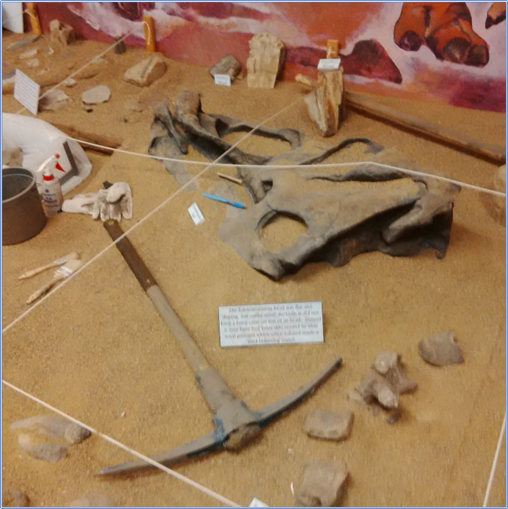
The good news is that Jesus is an amazing archaeologist, so good he makes Phil Currie look like an amateur.  When we come together to sing and think and reflect on his teachings, it’s like he takes another layer away from our tough dinosaur hides to reveal the fragile fossils beneath the surface that aremaking us roar and stomp as we try to protect them.  Good news for us T Rex folks:  the more we come together in community, the more human we can grow to be.  Thanks be to God for the seeds Paul planted, the stories Jesus taught, the watering by people like Apollos and the many other leaders down the ages that have guided and nurtured us so we too can guide and nurture those who also choose to follow Jesus.


December 09, 2020

Searching for Comfort and Peace

Imagine walking into a classroom on a Sunday morning where all the tables have been pushed aside and the chairs are arranged in a circle.  There are smiles and nods, and one fellow speaks up welcoming us to find a seat so they can begin.  There is no cross, no table, no hymn books or bibles to be seen.  We sit in silence for what seems to be forever but is only half an hour.  People share reflections of what came to their minds that they feel called to share.  Someone comments on how they are minded of the call to dress simply, not to adorn themselves with lace and sparkles.  I tuck my feet with my favorite shoes, black ballet flats covered with tiny black beads and sequins, under my chair.  There are no hymns, no bible readings and no sermons other than those reflections spoken into the centre.  It is assumed that the bible readings are a part of the daily practice of individuals at home.  This is the worship service of the Society of Friends in Halifax, whom we call Quakers, and one of the most profoundly peaceful and sacred moments of worship I’ve ever experienced.  The week before we had been to a completely different gathering, a large group with several different musicians and songs by folks like Cat Stevens and Carolyn McDade.  The preacher spoke at length about her pride in being the first atheist to ever graduate from the Atlantic School of Theology and how, in her three years there, she had argued and attacked the primitive ideas of her professors and classmates, some of whom were in their gathering that morning.  They had readings from Maya Angelou and other poets or philosophers. 

My two friends and I felt profoundly uncomfortable after being labled as primitive thinkers and left with much alacrity, not staying for coffee despite the invitation from our classmate.  We retreated to a restaurant, Cora’s, and took turns speaking the longest grace we had ever spoken. 

It was like we had been starved for the Divine and were more hungry for prayer than we were hungry for eggs benny and a mountain of fruit.  That service had filled us with the message that we weren’t good enough, and that everything we thought about was mere superstition and ignorance.  The Quaker service we went to the following week filled us with peace, self-reflection, and a deep sense of the real presence of the sacred.  In a word, we felt comforted.

Comfort oh comfort my people, starts the Isaiah passage and this year more than ever, we need all the comfort we can get.  We’re still not in as dire a situation as the ancient Israelites that Isaiah was writing to, but it’s plenty dire enough.

Whenever I turn, I hear stories of people feeling stressed, whether it’s the customers at grabbing a gingerbread latte from Paddymelons or the news reporter talking to a psychologist on how to help children cope or the loud judgemental voices on Facebook scorning public health officials.  Secret deals to set up emergency hospitals run by soldiers doesn’t help our levels of stress and it’s scary to hear of fist fights in Calgary malls or see photos of exhausted doctors.

So much chaos in the media and in our community does not make for peaceful times.  Where do we turn when we want comfort?  Many folks are turning to drugs and alcohol to manage their anxiety levels; some are turning to their worst habits and patterns as we hear in the latest reports from Healthy Family, Healthy Futures.  Irene Fitzsimmons, whom many of you know, is hearing more and more cases of family violence.  Her case numbers are rising as tempers flare and tolerance drops.

We look for quick fixes and perfect heroes, but we don’t know where we can find them.  Where is the comfort we are seeking, the security we are craving, the sense of peace we are praying for? 

I wonder if this year, we’re more able to appreciate the context and the testimony of our ancestors in faith.  Isaiah is writing to a people who have been suffering in exile for a hundred and fifty years.  It’s been generations since Jerusalem had been taken over by the Babylonians and the inhabitants forced into slavery and exile. 

The level of hope and peace must have been almost nonexistent to the generations who had never experienced the freedom to live where they chose or work at what they wanted.

And yet, one person in the quiet and stillness hears a simple invitation from God, “Go and tell my people that their time of alienation and oppression is nearing to an end, that a new time is coming and their God has not abandoned them.”

We need these words of encouragement today more than ever.  We need the reminder that this too shall pass, that humanity will survive this and the world will change again for the better.  We do this through humbleness, turning away and repenting of the quick fix solutions that only mask our anxieties and don’t deal with the root causes of our discomforts.  We do this by following Isaiah into the wilderness to hear God speak into the silence.   We do this by avoiding preaching like the atheist who bragged of her superiority.  We preach like John who says one greater than I is coming who will baptise with power and authority.

Searching for peace is more than superficial.  It is a daily practice, and a willingness to look at ourselves with honesty, stripping off layer after layer like peeling an onion.  To spend time looking at our actions and reactions and ask gentle questions of ourselves, where did that impatience come from, what was that resentment about, why did I react so strongly?  And remember that God says to us, “I come with a strong arm to set things right and a gentleness that gathers us like a flock of sheep and lambs”.  We practice peace with God’s loving presence, and that is good news worth shouting from the mountaintops and sharing with the world.  Thanks be to God that we are not alone in our journey to peace!

March 13, 2018

God’s Great Love


There are days when I hear John 3:16 and I just cringe.  We see it at football games and hockey arenas, we see it on soapboxes and t-shirts, we hear it hollered at us on street corners and on our front doorsteps.  We see it on the letters tucked in our front doors that say, ‘neighbors, we are inviting you to come and celebrate the death of Jesus.’  Ick.  We hear it preached at funerals when the pastor stands up and says, ‘So and So is sitting at the foot of the throne of Heaven, and you will never see them again unless you have accepted Jesus as your personal savior.’  This scripture has been used and abused.  As the United Church’s Song of Faith puts it, “The Spirit judges us critically when we abuse scripture by interpreting it narrow-mindedly, using it as a tool of oppression, exclusion, or hatred.”
When we interpret scripture, when we come together to hear it and wrestle with it and hear it again, we in the United Church do our best to look at scripture in its context rather than an individual verse here or there.  How many times have you seen a poster that said John 3:17 on it? Or even John 3:14-21?
Context is important.  In this case Jesus is having a late-night debate with a Pharisee named Nicodemus.  Nicodemus snuck over to visit Jesus and ended up staying a long time.  Just like when we have a visit with a friend or family member that we haven’t seen in a while and before you know it, the clock has struck midnight and it’s time to call it a day.  Nicodemus didn’t want to meet publicly with Jesus for fear of what his friends and co-workers might think.  He wanted to be anonymous.  Jesus told him that people who are afraid, who do things in secret, who hide their actions and their thoughts, well, they might just be following an unhealthy spirit that will get them in trouble.  Genuine God followers are brave, and they show up in broad daylight, following the God of Truth and light.  The God that sent Jesus, not to condemn the world, but to save it.
The God that wants to make a covenant of love with us, not a covenant of shame, fear and resentment.  The God that wants to liberate us into a life of freedom.  A life of forgiveness, hope, healing and even, dare I say it, happiness and community.  A life of amazing grace.
Too many of us are living lives that are dead, too many of us are the children of rebellion.  One translation of Paul’s words says the children of wrath, of anger.  How often do we let our anger, our jealousy, our resentment, our frustration and our fear get the best of us?  We say things and do things that cannot be undone, that destroy relationships, that hurt and diminish the lives we live and the community we have.  We forget to be servants to those who need healing.  Too often we live in hiding, afraid to tell the truth of who we are and what we’ve done.
But when we step up to be honest, when we stop hiding, amazing things happen.  I was at the Pride conference yesterday at the Seniors Center and talked from my heart about why I believe we need to stop judging our neighbors and start loving them no matter what their body parts are and how they use them.  I read some scripture from Isaiah that talked about blessing folks who are not heterosexual, who diverge from what we label as normal.  One person came up to me afterward and hugged me so hard that the cherry tomato I was holding got so squished the juices started running down my hand.  And afterwards, they were brave enough to give their name to the Advocate reporter who took their picture.  Talk about coming into the light and being full of truth.
We are saved not by magical incantations of special words, but by the abundant love, the grace that God showers us constantly, if we are only brave enough to accept it.  And this is no namby-pamby love that can teach the world to sing.  Oh no! It’s braver than the two ladies who walk down Whyte Avenue holding hands even though they know they will be insulted and whistled at and harassed by the people around them. 
It’s braver than the young people who have the hutzpah to ask for a Gay Straight alliance in their schools, and it’s more passionate than the horniest teenager ever to walk the face of the earth!  Kahlil Gibran wrote a much more realistic description of God who is Love in these stirring words:
“When love beckons to you follow him, Though his ways are hard and steep. And when his wings enfold you yield to him, Though the sword hidden among his pinions may wound you. And when he speaks to you believe in him, Though his voice may shatter your dreams as the north wind lays waste the garden. For even as love crowns you so shall he crucify you. Even as he is for your growth so is he for your pruning. Even as he ascends to your height and caresses your tenderest branches that quiver in the sun, So shall he descend to your roots and shake them in their clinging to the earth......
But if in your fear you would seek only love's peace and love's pleasure, Then it is better for you that you pass out of love's threshing-floor, Into the seasonless world where you shall laugh, but not all of your laughter, and weep, but not all of your tears. Love gives naught but itself and takes naught but from itself.
But if you love and must needs have desires, let these be your desires: To melt and be like a running brook that sings its melody to the night. To know the pain of too much tenderness. To be wounded by your own understanding of love; And to bleed willingly and joyfully.”
May we have the hutzpah, the courage and the honesty to step into the light and accept the great gift of God’s grace and love.