Showing posts with label ruts. Show all posts

August 25, 2026

Rule #6


Boy did Jesus ask hard questions!  Who am I?  And he had a new answer for who Simon was, who just two chapters ago, was caught sinking like a stone during a storm.  I suspect that after that event, there may have been some teasing by the other disciples, “Simon, oh he’s great, but whenever he gets in a tight spot, he sinks like a stone!”  Maybe Jesus decided to flip that teasing on its head and give Simon the nickname of The Rock, the cornerstone of the new community of love that Jesus hoped to build.  The new name stuck, and Simon made it a big part of who he was.  As Christians, we too are called to define and redefine who we are, and who Jesus is for us.  We are called to continually renew and explore our faith and our commitment to the teachings of Jesus.  We are to be like the ancient Christ followers who called themselves the People of the Way.  People on a journey.  People learning more and more about their relationship with God and their relationship with their neighbor, which are to be rooted and grounded in love.

One of the first workshops we did as part of the FAB Collab with Fort McMurray, Athabasca, and  Barrhead was where we explored who Jesus was for us.  We looked at a variety of artist’s images of Jesus, traditional ones, new ones, outrageous ones and comforting ones.  We reminded ourselves and each other of what our favorite Jesus story was, that had influenced our lives the most. Just like Jesus prodding his disciples, we were prodded to remember and share how Jesus and his teachings had influenced us.  And we made art to connect us in ever deepening ways to the story of Jesus.  Art about Jesus keeps us getting into ruts.  Humans like ruts.  We like them so much, sometimes I think we decorate them.  But when we get into ruts of who we are, or who we think Jesus is, we can get bogged down into narrow and inflexible ways of thinking.  Our Christianity goes from being a journey of exploration and growth to an institution where the status quo is focusing on maintenance rather than mission.  One person described it this way:

Institutions are driven by sustainability and survivability- neither of which should be a major focus of the church. Churches should not be led by institutional viability but rather inspirational viability. Inspiration means- to be filled with the spirit, always changing, moving, evolving and transforming. Christians are also called to be transforming and renewing constantly discerning what is good, acceptable and perfect.[1]

In other words, we are to keep learning and trying new ways of living our mission to love God and love others.  Easier said than done.  That’s where Rule 6 comes in.  It’s simple, straightforward, and helps us choose intentional love in times of conflict.  What is Rule 6, you might ask?  Benjamin Zander, conductor of the Boston Philharmonic Orchestra, described Rule 6 this way:

Two prime ministers are sitting in a room discussing affairs of state. Suddenly a man bursts in, apoplectic with fury, shouting and stamping and banging his fist on the desk. The resident prime minister admonishes him: "Peter," he says, "kindly remember Rule Number 6," whereupon Peter is instantly restored to complete calm, apologizes, and withdraws. The politicians return to their conversation, only to be interrupted yet again twenty minutes later by a hysterical woman gesticulating wildly, her hair flying. Again the intruder is greeted with the words: "Marie, please remember Rule Number 6." Complete calm descends once more, and she too withdraws with a bow and an apology. When the scene is repeated for a third time, the visiting prime minister addresses his colleague: "My dear friend, I've seen many things in my life, but never anything as remarkable as this. Would you be willing to share with me the secret of Rule Number 6?" "Very simple," replies the resident prime minister. "Rule Number 6 is 'Don't take yourself so g-damn seriously." "Ah," says his visitor, "that is a fine rule." After a moment of pondering, he inquires, "And what, may I ask, are the other rules?"

"There aren't any."[2]

Of course, as Christians, our first rule is to love God and love our neighbors as ourselves.  But Rule 6 reminds us of Paul’s scripture that asks us to stop measuring ourselves against others:  “not to think of yourself more highly than you ought to think, but to think with sober judgment, each according to the measure of faith that God has assigned.” That sounds like Rule 6 in theological language.

What happens when we do that? Great things! Naramata Centre [where Monica was until August 1] found neighbors knocking on their doorstep at midnight August 6.  They suddenly had evacuees, 15 of them, from just across the Okanagan Lake.  The evacuees were from Peachland and Summerland.  The staff didn’t hesitate despite knowing that they would lose all the revenue from the next two weeks, they cancelled all the reservations and became a residence for Evacuee families, finding food, shelter and even activities for kids.  They chose Christian hospitality over budget, no questions.  Naramata Center is one of many United Church Communities which when faced with challenges, have remembered to put love as their main priority.  We do that here too when we provide food for the hungry and comfort for the grieving.  We do that when we open our doors to strangers and feed the hungry.  We do that when we act courageously and renew and explore our faith.  We define and redefine who we are, and who Jesus is for us.  By remembering Rule 6, and following the teachings of Jesus and Paul, we can learn humbly to live lives of action, faith and spirituality.  And Jesus will give us new names too, names like “Beloved, friend, and disciple.  May it be so for us all.

Please check out Naramata Centre's video of their pivot to support evacuees here: (2) Facebook


[1] Pulpit Fiction, accessed August 19, 2026

[2] Zander, Benjamin and Rosamund, The Art of Possibility, Penguin Books, 2000, p 79

May 02, 2023

Feed my Sheep!

 Jesus keeps popping up in the most unlikely places in Easter resurrection stories.  The locked room, the road to Emmaus, the empty tomb, the gathering a week later with our good friend, Doubting Thomas.  Every time, it is unexpected, and it is life changing. 

“Feed my sheep”, Jesus asked Peter, again and again.  Poor Peter felt nagged and pestered.  And no wonder.  He just wanted to spend time with this illusive, here one moment and gone the next Jesus who popped up when Peter least expected him, then would disappear for days and weeks.  Who knew where he would show up next?  Or when or why or how?

And my goodness, he was disruptive when he showed up.  Jesus didn’t let the disciples slip back into the old patterns of behaviors.  Peter and the Zebedee brothers were fishermen before they met Jesus, and went back to their familiar ways.  They went back to what they knew best.  They went back to the life that they had been only too excited to leave.  It can’t have been much of a job and they couldn’t have had much of a passion for it if they were so quick to abandon it the first time.  Jesus didn’t let them stay stuck though, oh no.  Jesus had better things in mind for them all.

I think it’s very natural to go back to comfortable habits when we are stressed.  Teachers and parents often talk about regression of children when they experience challenges.  When a three-year-old gets a baby brother or sister, they will often forget what they have learned and might start sucking their thumbs more or have more temper tantrums.  Older children may cling more to their parents.  At a wedding I did last summer, teachers were telling me that the children were two to three years behind in their maturity levels and social skills because of trauma.  It happens.  During Covid, I found myself turning into a computer game zombie when I wasn’t at work.  I slipped into old habits again, bad ones.  I had to reclaim the positive habits and become very intentional about substituting the good habits for the bad.  It takes a lot of effort and time to get out of our ruts.

Sometimes going back is the only way to go forward.  I remember when my children were going into junior high school, and we needed me to be working.  The idea of going back to work gave me panic attacks because I thought that the only job I would get was flipping burgers at MacDonald's.  It scared me to think about brushing off my old resume.  My stomach was in knots and I didn’t know what to do.  I went to Naramata Centre that summer and took all my fear into it’s labyrinth.  As I walked that big twisty path, I found my shoulders loosened, my thoughts slowed down and I relaxed for the first time in months.  As I reached the centre of the labyrinth, I had a sudden picture in my mind of being in a rollercoaster, at the very top of a tall hill, ready to go down in a steep dive.  And a voice saying, “buckle up, you’re in for a wild ride!”  Not actually a comfortable message as I hate rollercoasters with a passion!  8 months later I was working at City Hall, 2 years after that I was working in a religious bookstore, a year later, I was studying in Halifax to become a minister, and that led me to Athabasca where I still am today.  It has indeed been a wild ride.  Would I have gotten that same sense of calm without walking a labyrinth?  Probably, but labyrinths have been my fishing boat, my ‘go to’ when I’m stuck.

It's like the scene in a favorite movie of mine, the Princess Bride.  Inigo Montoya, the Spanish swordfighter, is separated from Fezzik, the giant strong man, and remembers that if they got separated, they were to go back to where they started.  Inigo returns to the village, is reunited with Fezzik, and they lived happily ever after.

What is your beginning?  What is your labyrinth or fishing boat?  Where did you first have a sense of something greater than yourself, where you found peace or hope?  What sorts of things help you look beyond the addictions we use to fix the stresses of our lives?

In the end, the only question that really matters is the one Jesus asked Peter.  In the Good Friday stories, Peter lied three times.  Jesus questioned him on the shore three times “Do you love me?” and this time Peter told the truth.

Do we love Jesus?  Do we love the healing we have found, the courage we have felt along the path of faith, do we love those moments where the stories of Jesus help us get unstuck?  Do we love working and playing together in this community that is striving to follow Jesus’ footsteps?  Do we hear the call to feed the hungry sheep of our world who are looking for help to break out of their own ruts?  Do we remember making a difference through socks for the homeless, prayer shawls for the heartbroken, coins to heal places like Ukraine, meals to feed the hungry in this town, and building safe spaces where all will feel welcome?  Are we willing to love Jesus and experiment with living out his teachings?  And will we feed his sheep as he has fed us with wine and bread and hope and love?  We can do all this, when we remember that together, we can do and be more than we can as individuals.  When we seek Jesus, when we dare to dream and hope and throw our nets in new directions, we will find Jesus at the lakeshore and be fed by his love and compassion.  May it be so for us all!


April 27, 2021

Stuck in our own ditches, Investing in sheep

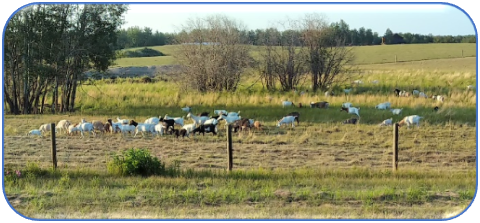
On this Good Shepherd Sunday, it is helpful to remember the reality of working with sheep.  They can be very smart, especially the bell weathers, and at other times they can be, well, not the cleverest animals you have ever met, and just as prone to mistakes as we humans can be. Here's a video to remind us what sheep can be like: (99) Sheep gets stuck in trench, jumps back in - YouTube. So they can get into ruts and need help getting out, only to fall into bigger and deeper ruts.  Not unlike humans.  We can get caught in emotional ruts and intellectual ditches unintentionally, we can get stuck and not know how to extricate ourselves from the holes we are in.  

Cue the shepherd, and not just any shepherd, the good shepherd as mentioned in our scriptures this morning.  One thing I learned this week was the word for ‘good’ used in the original Greek might be better translated as ‘model’.  So, although the shepherd in our scripture is contrasted with a hired hand who doesn’t have a relationship with the sheep other than their paycheck, it’s not so much that the shepherd is ‘good’ and the hired help is ‘bad’.  It is that a model shepherd, an ideal shepherd, the kind you want to hire to take care of your flock, invests more than time into the flock.  It’s not just about the paycheck, it’s about where the heart is invested.

Both our scriptures talk about Jesus, our model shepherd, as being so invested in the flock that he was ready and willing to sacrifice even his life for those sheep.  To be so into a loving relationship that the gospel writer later wrote, “greater love has no one than this that someone lays down their life for another”.  Our model shepherd loves so deeply that they will risk their body for not just another person but a whole community.

That is quite the model to follow.  That’s quite the inspiration, that’s quite the big shoes to step into.  Jesus said that this love was so big that it encompassed others who were not a part of the inner circle, the disciples and followers that were part of the flock.  Jesus specifically spoke about the other sheep that were also needing a shepherd.  The ones who were lost, the ones who had wandered off, the ones who were isolated, the ones who were in pain or in danger.  Jesus wasn’t there just for the 12, or just for the people of Israel.  Jesus was there for the big picture.  Jesus was deeply, emotionally invested in the wellbeing of each and everyone in the world.  That’s quite the model.

We see plenty of examples where people are not following the model of being invested in the wellbeing of everyone.  Anti maskers who want their businesses reopened and so what if a few old people die here or there.  Racists who think it’s fun to use a microphone with a noose attached to it during a public demonstration in Northern Alberta.  Politicians who don’t support their own party’s stance on health regulations.  A legal system that throws out tickets issued to people flaunting the health regulations. Police officers who think it’s okay to kneel on someone’s neck for nine minutes and twenty-nine seconds.  Plenty of stories of people who are more like hired hands than role models.

We too are called to listen for the Shepherd’s voice and become loving, invested role models for our community.  This is not easy work.  How do I love the person who thinks that I am bad or political when I wear a mask or sign up for a vaccine?  How do I love the person who tells me I am a sheeple, and stupid for believing doctors, scientists, and politicians?  How do I love the neighbor who thinks it’s okay to pollute the world with facemasks?  Or the family member who promotes conspiracy theories every time we call?  Sacrificial love is not easy in these situations.

Where are the role models who care to the point of sacrificial love?  I recently learned about a movement in Minneapolis that started after the George Floyd murder.  One lady courageously donned her clergy collar, e-mailed her colleagues, and went out into the riots to listen and support protestors.  She became part of a growing team who wear bright orange t-shirts with the word ‘chaplain’ on it in bold letters.  They hand out everything from bottled water and pizza, but mostly they listen.  They listen to trauma, fear, anger, frustration, racism, injustice and more.  And day by day, they are modelling what it means to be a caring and loving presence in the world.  It is not easy work, it is not safe work, but it is work that they have felt called to do.  To bring healing in a time where the world feels out of control.

Sacrificial love for ordinary sheep is the model shepherd’s highest intention.  The model shepherd is not me, and not you, but we can become inspired to imitate that model to our best abilities.  Just as Jesus had very clear intentions centered around loving his flock, we need to wrestle with our intentions.  Why do we feel the need to pick up that phone, write that letter, talk to that person?  Is it out of love for our community or is it out of anger or fear?  Can we see that individual as part of our flock that we are called to guide?  There are some sheep that are in a deep hole of anger, distrust and fear because that’s how they are meeting their needs for safety.

And we need to be aware that we can feel more like the hired hand than the shepherd.  Our ability to love that sacrificially might not be there yet.  We may not be as healed as we’d like from our own feelings of fear and anger.  We may not be invested in their welfare as much as our own.  This may be the Model Shepherd’s voice calling us to rest patiently until we gain our own strength and safety before we try to rescue others.  It’s very easy to think we can fix things and people when we are stuck in our own ditches.  And trying to fix other people because we know best is the very definition of colonial oppression which led to residential schools and other racist interventions; because we did not have our intentions grounded in sacrificial love. 

And maybe we need to recognize that we are not the shepherd called to help them out of that hole, or that this is not the right time for us to help. Our most loving action may be to rest and pray that we be pulled out of our own ditches and that they may find someone wise and patient who has the skills to pull our neighbors out of their ditch too.  There are many resources that we can refer people to. But we can choose to invest in the most loving outcome for people who are struggling, just like us, to make sense of the world.

We are not Jesus, the model shepherd who is deeply invested in our welfare.  But we can listen for Jesus and remember to do our best to love others as we have been loved, deeply, unconditionally, and love ourselves as well especially when we feel like we’re caught in a ditch like a silly sheep.  We are loved, even then, and thanks be to God for that sacrificial investment of love!