Showing posts with label black history. Show all posts

February 20, 2024

Between the Lines

Ever wonder what happened to Mark’s story telling?  He leaves out so many details! He’s like that teenager we try to have a conversation with at the supper table.  “How was your day, dear?”  “Fine” “How was school?” “The usual”.  “How are your friends doing?” “Okay. Can I go now?” And we hear them clomp upstairs to their room then call their friends and have a two-hour conversation about how their day really went, who said what to whom, who talked to the wrong person, or did the funny thing that got the teacher mad or wore the oddest outfit to school.  The conversation that doesn’t really happen with us but happens with others.

Mark takes 6 verses to tell a simple story of the first days of the ministry of Jesus.  Contrast that to Matthew’s 18 verses and Luke’s 15 verses.  John stretched Mark’s five verses on the baptism of Jesus into 8 verses and skipped the temptation altogether.  John had a very lofty idea of Jesus, what professors and theologians call a ‘high Christology’, so high that Jesus would never have struggled with things like power or fame.

So, Mark did the Coles notes version of the start of the mission of Jesus, fast and short so he could get to the good stuff.  His was also the earliest gospel written, 12 to 14 years after Paul started his letters. Matthew and Luke didn’t write their gospels for another ten or twenty years later.  It could very well be that Mark was writing things down so briefly more to jog people’s memories.  “Remember that time when Jesus went and got baptised, then wandered into the wilderness?  Peter, remind us of what he told us happened?  James, what can you add?”  It may have been his way of encouraging people to share the memories that they had.

These stories, some of which were collected into the later Gospels, were stories of great transformation.  They were stories of great courage.  They were also stories of small transformations, the fever healed, the kindness shown women and children.  Sometimes the transformation was fast, like Jesus getting baptised and whoosh God shows up and does a happy dance worthy of a Super Bowl touchdown.  Sometimes the transformation was slow, like 40 days of wilderness wandering where there were no human witnesses to the temptations Jesus faced.

We tend to glorify the fast, the big, the showy transformations, the big turning points in a human being’s life, or in a political movement.  One fellow I talked to said that he didn’t like Black History Month because all we hear about are Martin Luther King, Nelson Mandala, and Rosa Parks and that is it.  We don’t hear about the nameless people who take a stand for change, who want to make a difference in the world, and who have to let go of their fears of failure, or even more insidiously, their fears of success, to make a stand for a principle they believe in. 

A good example of this is a little-known gem of a movie starring Sissy Spacek and Whoopie Goldberg.  It was made in the 1990’s and unlike the Color Purple, Ghost, Jumping Jack Flash, or the many guest appearances Whoopie did as Guinan on Star Trek the Next Generation, this movie was not a comedy hit for her.  It did not win Oscar nominations or huge profits.  It is a movie that falls between the lines.

It's also a movie about ordinary women living ordinary lives according to the norms of the1950’s Alabama society they lived in.  An ordinary housewife married to a successful city leader and her ordinary housekeeper who took care of the children, cooked the food and cleaned the house.  Until the housekeeper started showing up late for work, soaked from the rain, and one day, so footsore that the blood soaked through her shoes.  Many of us know about Rosa Parks, who became famous for refusing to move to the back of the bus.  We don’t know about the quiet folks like Whoopie’s character who boycotted the busses after Rosa’s resistance.  Many people chose to walk to work from the poorer areas of town to the richer parts where their jobs were.  They organized carpools and rode horses or bicycles to work.  Other communities rallied to support the boycotters by sending financial aid or pairs of shoes to replace the  worn out shoes of the boycotters.  This frustrated many townsfolks, from bus drivers driving empty buses, to politicians and business people.  Vigilante acts of violence tried to intimidate folks into once again riding the buses, but people had enough of the disrespect, the racism, the discrimination and the hardship imposed by segregation.  They boycotted the busses for a whole year until the segregation stopped.  A whole year!

They risked everything because they had a clear vision.  They risked losing their jobs because they wanted a better world for their children and grandchildren.  They risked being attacked because they had nothing to lose.  They risked because they realized that they had strength in numbers and deserved to be treated with dignity.  They risked because they knew that if they didn’t, nothing would change for the better.

Sometimes the risk can be small.  A school teacher named Harriet Glickman wrote a letter to a comic strip artist shortly after Martin Luther King was assassinated.  And because of that letter, Charlie Brown gained a new friend named Franklin, changing the world of budding young artists and children everywhere.  Because of one letter she risked writing!

Jesus risked everything for the sake of his vision and because he loved people.  He knew that the discrimination, poverty and oppression they were experiencing was not what God wanted for the world.  Our province is also struggling with poverty and discrimination.  Trans people are targeted, people are living in tents, friends are dying because they can’t get medical care quickly enough.  Can we risk speaking out, writing letters, making calls, signing petitions?  Just like the housewives and housekeepers, it’s those little risks we take together that can change the world.  When we work together with deep spirituality, bold discipleship and daring justice, we can help God change the world once again.  May we have the courage to take risks to stand with all who need to know God loves them.  Amen.

February 13, 2024

Dazzled and Delighted

Today is Transfiguration Sunday, the day in which we study this mysterious scripture of Jesus transformed before the very eyes of two of his disciples.  They thought they had seen it all.  Healings, exorcisms, crowds of followers, teachings that brought a new understanding to the old scriptures and a renewed dedication to their God.  Then the long climb to the top of the mountain, probably not as tall as the mountains in Jasper or Banff, but still heady enough and high enough that it would have been hard, sweaty work.  And mountain tops are tricky things with weather changing rapidly from one moment to the next.  You know what they say, if you don’t like the weather, wait five minutes, and on a mountaintop, that’s especially true.

Thin air, exertion, and who knows, maybe there were some funky mushrooms in the breakfast omelet they ate that morning, but whatever the case, strange things happened on the mountain top.  Strange things often happen on mountain tops.  Maybe even near-death experiences, where people see things and hear things that they least expect.  Like Paul wrote, in the busy lives we live, everything seems veiled, obscured, hard to sort out.  The temptations of this world, the misinformation, the story after story of scarcity or disaster or greed, and soon our view about the world can be totally skewed.  It’s hard to figure out what is important in our lives when we are bombarded by so much news and rumor and gossip.  How do we step back and make sense of it all, how do we take time to think about our own personal big picture, who we want to be, what we want to do with our lives, how do we show up?

One image from a recent Marvel movie shows the power of getting away to figure out the bigger perspective.  The movie Black Panther starred Chadwick Boseman as the hero, King T'Challa of the mythical country Wakanda.  When his father died, T’Challa went through a ritual that brought him to a near death experience, an encounter with his father and the rest of the ancestors that had proceeded him.  It gave T’Challa time to struggle with what kind of leader he was going to be, what his purpose in life was, and how he was going to live out that purpose.  He talked with his ancestors, and even talked back to his ancestors, challenging their motives and their priorities.  He wrestled with how he would provide leadership, not just for himself, his family and Wakanda, but for the whole world.  By connecting with his ancestors and what they had done in the past, living by their highest principles, he was able to make choices for himself, rooted and grounded in his culture, his heritage, and in his highest principles. 

Now this is a lovely image, and helpful in some ways, but it’s movie magic and fairy tale, and not very rooted in reality.  Marvel does tend to be a spectacle of violence and fighting, whether it’s warriors using unimaginable technologies, or two men slugging it out in a subway.  Most of us will never see as Paul puts it, “the god of this world who blinds our unbelieving minds” as a villain to beat up.  And as followers of Christ, we learn that violence only creates more violence, and peace comes through understanding, compassion, listening and prayer.

But even more thought-provoking than the Marvel movie, was how it was made, and the response that people had to it.  Firstly, it was written and directed by African Americans, the first Marvel movie to do so.  Black story telling from the deep understanding of what it is like to live in our world with a skin tone that is often perceived as less than, or a reason for discrimination.  The story showed two perspectives, the people in Africa who live in sophisticated cities, and the people in the slums of the U.S., still suffering from the legacy of slavery.

That movie view of the world from those two perspectives was so surprising that countries in the Sub-Saharan nations had a 3 million person rise in tourism the year that the movie was released!  It was nominated for eight Oscars, some of whom had never had an African American nominee in that category.  People adopted the slogan ‘Wakanda forever’ as an inspiration when they needed the courage to challenge racism.  But even more inspiring was the example of the lead actor, Chadwich Boseman.  Unbeknownst to any of his fans or his cast members, Chadwich had been diagnosed with colon cancer the year before shooting Black Panther.  When the fan response went wild, he connected with as many people as he could, to inspire and encourage them in their struggles.  In one interview, he broke into tears telling of two boys undergoing cancer treatment and how they took courage from the movie.  All that time, whether it was surprising fans with his presence, or going on talk shows to respond to the wild enthusiasm that the movie had created, he never said a word about his cancer, and acted as regally and compassionately as his character, t’Challa.  He was only 43 years old when cancer ended his life, and that unexpected loss shocked many. If you happen to see the sequel, “Wakanda Forever”, it is a powerful tribute to grief, to continuing the vision and dreaming of the future. His legacy of hope continues to inspire all who knew and saw him. 

For us, Jesus is the one that transforms our lives in ways too surprising to understand.  We too have ancestors of our faith, Moses and Elijah, Peter and James and John.  We too have had mountaintop experiences or near-death encounters that changed and challenged our priorities.  Our Sunday mornings hopefully are mini mountaintop experiences that inspire and encourage, empower and include all in the vision that Jesus and Paul had for the world. May these ancestral visions shine in our hearts to give the light of the knowledge of the glory of God’s transforming vision for the world!

Two videos of Chadwick Boseman and his fans that you might like:

https://youtu.be/6J-D86wfxiE

(15) Chadwick Boseman Surprises Black Panther Fans While They Thank Him - YouTube

March 01, 2022

Transfiguring Freedom

 In 1925, the same year that the United Church was founded, a baby was born to immigrant parents in Montreal.  Not terribly unusual, it was a big family, and there were already three other children and there would soon be a fifth.  The baby’s father was a porter on the railways and would regularly travel from Montreal to Vancouver for the princely sum of $90 a month.  The mother earned $5 a month as a housemaid.  It was barely enough to make ends meet, and many times the children stayed in bed because their parents hoped they would sleep through their hunger.  They were one of the poorest families in the neighborhood.

But that poverty did not define who they were.   They were committed to two things; Union United Church, the oldest Black United Church in Canada, founded in 1907, and music.  Every Sunday they would go to church, sing the hymns and play in the community band.  The dad had taught himself to play the piano and to read music and he was determined to teach every child the same thing.  As soon as the older kids were good enough, they became the teachers of the younger ones.  Hymns and classical music were what they learned, and woe betide the child who didn’t practise their scales!  They started lessons when they were three years old and big enough to sit at the piano. The oldest daughter became so good at teaching her younger siblings that she eventually made a living as a piano teacher.  Music gave her the freedom to leave the hard work of being a maid, to the hard work of inspiring young people to make music.  But that fourth baby was very special.  He could play a song that his older brothers and sisters struggled with, just by hearing it once.  He didn’t even need to see sheet music to play it.  He loved playing trumpet in the band until he got so sick with tuberculosis that he spent more than a year in hospital.  He never played trumpet again.  But then he discovered jazz!  That not only transfigured his moods and his hopes but also set the stage for his future career.

And what a career.  When he was fifteen, his older sister took him to the CBC radio station without telling him why.  She had registered him in an audition for a contest which had performers much older than him trying out.  He passed the audition, and won the contest against not just all the Montreal performers, but all Canadian musicians as well!  By the time he was 20, he performed to a sold-out crowd in Toronto’s Massey Hall, and by the time he was 24, he performed in Carnegie Hall.

He also struggled.  Barbers in Hamilton refused to cut his hair because he was African Canadian.  A white teacher in his elementary school called him racist names.  One of the bands he played in was banned from a Montreal hotel because he was their pianist.  When he became famous after his Carnegie Hall debut, he went on tour in the United States, and discovered that in the southern states, restaurants wouldn’t serve him, hotels wouldn’t let him stay with the rest of the musicians, and once the room he slept in had no bathroom but only a bucket of sand for a toilet.  With so much hatred targeted at him, he delt with the stress as best he could, remaining the polite Canadian he had been taught to be by his family and his church.  It was while on one of those tours that he was encouraged to write a new piece of music with a bluesy feel to it.  He called it “Hymn to Freedom” and it became the unofficial anthem of the Civil Rights Movement. A Canadian Song!

Now, I don’t know about you, but freedom has become an uncomfortable word in recent days.  It has been used to promote an extreme agenda, and equates temporary measures put in place for the common good of the community with oppression and dictatorship.  It was used to shut down awkward questions, and to accuse people who have differing opinions as being pawns in a supposedly increasingly totalitarian state.  It was being used to justify an individual’s desire to do whatever they want.  But freedom is not supposed to be a weapon to shut down dialogue, nor is it supposed to be a justification of behavior that ignores peace, order and good governance, our founding constitutional principles. 

Freedom means many things to many people.  Now we are reclaiming that meaning as we watch and pray over friends, relatives and kin in the Ukraine and surrounding Slavic countries.  Slovakia, the homeland of my grandparents, aunties and uncles, is also in danger as refugees stream across its borders.  When I visited as a child, there were secret police in every village, army soldiers in every street, and art of Lenin everywhere one looked.  Freedom was not part of the constitution.  Everything was controlled by the state and those in power.

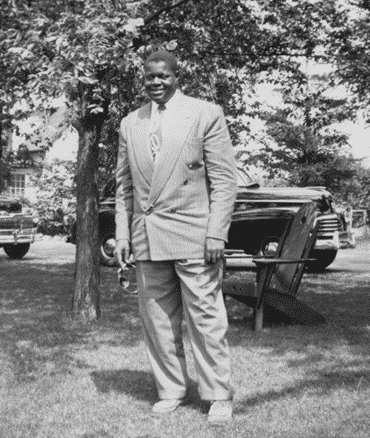
Freedom, for our musician friend was seen as the precious and transforming principle for a whole nation.  He could have been targeted for vigilante violence by drinking at the wrong public water fountain, but his music inspired folks living with systemic, widespread and brutal racism to have hope.  His music transformed them as it had transformed him.  Just as God transformed Jesus on the mountaintop, revealing him as someone who was even more powerful and inspiring than the disciples guessed. Both men, Jesus and Oscar Peterson, knew that transforming the world so more people would know true freedom, would be hard work.  Both men worked hard for it even though they knew they wouldn’t see it come true in their lifetimes.  Both were determined to make a difference in this world, no matter the sacrifice, the personal cost.  For Jesus, it cost him his life, for Oscar, his personal life was a mess, and his physical health was not great either.  But he left an amazing legacy.  I found his piano course in a music store in New York, of all places.  He started music schools and taught the next generation how to play jazz and Bach both.  He challenged racist commercials on CBC.  He encouraged musicians to join AA and give up drugs.

And yet, when the top two jazz musicians in the world worthy of being mentioned in the Alberta government’s first draft music curriculum for Grade Six were announced, one was Glen Miller of “In the Mood” fame, and the other?  Not Oscar, not even local musician Tommy Banks, but Mart Kenny who didn’t even live in Alberta, and only recorded two records to Oscar’s 200 recordings spanning over 60 years, 7 Grammy awards and the first Canadian pianist to receive the Glenn Gould prize for music, not to mention the Order of Canada.  Mart Kenny’s biggest claim to fame other than the song “When I Get Back to Calgary” was being the grandfather of our current premier.  Both musicians were white, and we all know that many of the best jazz musicians were and are people of color.  So, racism is still here in Canada, sometimes subtly as in our curriculum, sometimes blatantly as demonstrated by some of the protesters in Ottawa, or regularly as related by Albertan United Church clergy of color.  And we are called to be as determined as Jesus, and as committed as Oscar Peterson, to use our privilege to challenge racism wherever we see it.  Black History month is a call to transfigure our awareness so that one day everyone will sing a song of freedom that will be true for all in the world.

February 22, 2022

Spilled Coffee

So I’m coming out of Paddymelon’s with a big coffee mug full to the brim.  Someone jogs my elbow and what spills out all over the sidewalk? Coffee? 

Well, those who know me really well will say anything but coffee unless I’m bringing a cup of joe to my husband Tim.  Tea possibly, chai latte or London fog, white hot chocolate, just about anything but not coffee.  Why?  Because what I put in my coffee mug is what will come spilling out. 

So too, what will come spilling out of my mouth may be any number of things.  Since I’m a Canadian, an apology.  “Sorry,” I will say, even if the person jostling my arm was the instigator of the spill.

If I’m at home and it’s been a long day, and Tim backs into me when I don’t expect it, there may be something far different than “sorry” spilling from my lips.  And if the coffee mug drops, splashing boiling beverage all over me then shatters to a million pieces, especially if it’s a favorite mug from a beloved aunt who has long since left this earth, well, even I don’t want to hear the words spilling out of my lips.  And if it’s been a really bad week, with a funeral that shouldn’t have happened to someone too young or too close, well, there just might be tears involved on top of it all, and a real honest to goodness grief burst!

What comes pouring out can be quite situational, and quite human.  Being human is a messy business, with emotions that hit us when we least expect it, sometimes right between the eyes, sometimes right in the stomach.  We find anger flaring up, resentment, frustration, jealousy, envy.

We pray, God, fill us good guys with good things, we’re on the right side, reward us please, and punish the evil doers.  Dry up their bank accounts, impound their trucks, put their kids in the foster care system, confiscate their weapons, and lock them up where they can’t threaten us anymore.  That too is human.  But thoughts like these can fill us up with evil emotions.

Scripture says “Be still before God and wait patiently.  Do not fret because some prosper in evil schemes.”  Easy to say, hard to do, especially when our nightly news is full of disturbing images of police in body armor, collections of guns being discovered horded by protestors, of politicians scolding each other, of racist flags, of children being taught to blockade legitimate traffic between two countries.  Be still before God, wait patiently.  Even harder, let go of anger, and recognize the damage fretting can do to the human soul.  Trust in God instead of imperfect, messy humanity.  One of the reasons I believe so many people were entrenched in Ottawa is because they put all their trust in themselves and no one else.  If the election brought in a government that they don’t like, they don’t trust the rest of Canadian voters.  If the medical community brought in restrictions that they don’t want, they sneer at the very people trying to keep them alive.  If the scientists make discoveries they don’t understand, they call them names and view them as part of a mass conspiracy.  If the media tries to communicate what the voters, the medical researchers and the scientists are discovering and they find it confusing, they turn to other sources that stoke their anger.  They only believe in themselves and the hope that they will get their own way.

They do not have hope in ideals, in principles, in due process or in the Golden Rule.  Do to others as you would have them do to you is not where they are at.  I suspect that they would not respond pleasantly if someone moved into their homes and started blaring air horns 24/7 for weeks on end.

Luke’s passage has Jesus recognizing that not everyone will be able to hear his words.  “I say to you that hear me”, or in other versions, “you that are still listening”, means that he too knew the messiness of what Jeremiah called the deceitful human heart.  Jesus knew that what he was teaching was so hard that folks were tuning out.  He had just told them about the beatitudes, the Blessed are those who the world think are cursed, and that was a conversation stopper for most of them.  Then he threw a real zinger at them.  "Love your enemies, and do good to those who hate you."  Well, that is so against what human nature wants to do, that it would tune out a lot of his listeners.  No way would good Jewish people want to hear that they were to be loving to the Roman soldiers that oppressed them, the tax collectors that robbed them, the schemers and power brokers that bullied them.  But that is exactly what Jesus was trying to teach them.  And with his ‘Turn the other cheek’, he was laying the groundwork for nonviolent resistance.  As one internet pundit wrote, "Let me be very clear.  This was not a call to grit our teeth and be nice to bullies, to stay in abusive relationships or to be quiet in the face of injustice."  This was a call to make sure everyone could see the bullying for what it was, and by standing up to them to offer the other cheek, or giving them your shirt as well as your coat, was to show to everyone around that they were doing this shameful behavior but you still kept your dignity intact.  But how does that play out in real life, Jesus?

A good example is the Greensboro sit in back in February of  1960, where young black college students prepared themselves to go to a Woolworth’s lunch counter and sit there until they were served lunch.  They knew it wouldn’t be easy.  They practiced so that no matter what violence was thrown at them, they would stay calm and not retaliate.  They would not punch back, they would not fight, they would not bring in guns or weapons or horns or hot tubs or flags, they would just sit until they were offered a menu.  Four young college students sat waiting for food that did not come.  The next day they were back, and the news spread to other colleges in the Southern US.  At one point there were 300 students at that lunch counter, and it became one of the cornerstones of the Civil Rights Movement.  Segregation ended although the racism never did.  But that Woolworths counter now houses the International Civil Rights Center and Museum, which includes the lunch counter where the Greensboro Four sat.

Coffee was served to anyone who wanted it, and tea and probably some iced teas and sodas.  And eventually the love that they had for their cause and for justice and equal rights for all spilled out on everyone around them.

What are you putting in your coffee mug?  What are you putting in your heart and mind?  Are you able to hear Jesus teach you to love your enemies and do good to those who hate you?  It’s not easy, of course, but I trust that this is what God is calling us to do.  Not to love the angry actions of the people who are hurting others by their noisy protests, but to look at them for the stunted shrubs in a dry desert, for the hopeless people that they are who don’t know how to trust in anyone but themselves.  Who put anger in their coffee cups and don’t drink anything other than that.  And to fill up our own coffee cups with stillness before God so that when the difficult times come and we are jostled by life, what will spill out will be peace and hope and compassion for all who struggle through these difficult times.

March 05, 2021

Kumbaya Oh Lord!

I remember learning to sing Kumbaya in school and at camp, and it was simple, fun, and open to as many verses as we could come up with. But over the years, Kumbaya has become a symbol of shallow togetherness, artificial peace and pretend harmony.  Everyone gathered around the campfire singing of simple times and not really knowing what the song is about.

So Kumbaya, for better or worse, has gotten a bad rap over the last 10 or 20 years.  And I’d bet that Peter was thinking his time of discipleship with Jesus would be one long singalong campfire joyful healing experience as Jesus and the disciples wandered around from one town to another getting rave reviews and growing their numbers.

Jesus had other ideas and clearly articulated them to his disciples.  That’s when Peter lost it.  He jumped up, pulled Jesus aside and accused him of messing with the mood, of being a Debbie Downer instead of a ra ra leader.

Which led to conflict and what we call ‘a teachable moment’.

Conflict is not a pleasant thing at the best of times.  It leaves us feeling unsettled, squeamish and upset.  I remember when I was little hiding under the sofa with my hands clamped over my ears when my parents had arguments.  But surprisingly, when two ministers of the United Church took a sabbatical in 2019 to study thriving congregations, they found that thriving congregations were not ones of no conflict, singing Kumbaya around the campfire, but ones that did have conflict.  So many congregations, especially since the big splits in the 1980’s and 90’s.  They worry about losing members because of differing opinions.  They avoid conflict at all costs and unfortunately that can cost their ability to thrive and be healthy.

Now I’m not saying that a healthy congregation pulls out the boxing gloves and lets people take a piece out of each other until everyone’s rage is spent, but conflict can be done in loving and respectful ways.  If we try to cover up the rubbing points, it can be like blocking up the spout of a kettle that’s plugged in.  When the water reaches boiling temperature, there’s no where for the steam to go and the kettle explodes.  But if we can be open to communicating that we’re feeling a little hot, we can unplug our kettles before we boil over, and that is what leads to healthier, thriving congregations.

How do thriving congregations handle conflict?  Well, going back to the Mark passage, we see some things that Peter gets right and Jesus gets right, and some things Peter gets wrong and even Jesus messes up.  Who wins in this ancient boxing match?

Jesus states his mission and his values, his goals and his objectives clearly and articulately.  Point to Jesus.  He does so openly to the whole group, no secrets or side conversations.  Another point.

Peter hears something that bothers him, and he decides to talk to Jesus directly.  He doesn’t start rumors or complain to the other disciples behind Jesus’ back, or even stomp off in disgust, which is the equivalent of the kettle blowing up.  He decides to talk to Jesus about it.  That’s a point for Peter.

Peter then pulls Jesus aside and speaks to him quietly, not in public, another point for Peter.  When we correct people in public, especially if that’s the only thing that we do, we are shaming and embarrassing them.  That is not respectful or loving.  So far it’s a tie, Jesus 2 points, Peter 2 points.

But then it goes off the rails into a full-out yelling match.

Peter assumes that he knows what’s best for the group.  Bring out the guitars, he tells Jesus, let’s make this a happy sing along, enough with the gloom and doom.  Peter is not the slightest bit curious as to why Jesus would say what he said.  Peter is not interested in building understanding, only in pushing his agenda.  He loses a point for this. Peter 1, Jesus 2.

Jesus gets mad and lets ‘er rip!  He resorts to name calling, my favorite version is in King James, “Get Thee Behind Me Satan!” So often we see folks resorting to name calling instead of discussing facts.  I certainly see that a lot on the internet.  Labelling is a losing argument.  Jesus loses a point.  Still tied but now it’s 1 point each.

Then Jesus scores two more decisive points.  He gathers everyone together and doesn’t say “Well Peter, you smell like fish, and your fingernails are dirty.  Trim your beard and wash your sailor’s shirt.”  No shaming or blaming here.  Jesus 2 Peter 1.

And Jesus gets the second point by restating and rearticulating his vision and mission.  “It’s not about your comfort or your fame or your happiness.  It’s about the good news of God coming and being here and now for everyone not just the entitled.”  Jesus 3, Peter 1

Peter gains points to finish the match.  He sticks around to listen, he doesn’t stomp off saying “I quit”.  And he really thinks about it.  Tie game.  Or as conflict experts say, “Win win”.  No back stabbing, no gossiping, no nitpicking.  He buys in to the mission and ministry.  He buys into the message.

And what is that message?  That God is coming in the midst of our fears, our loneliness, our isolation, our frustration, our despair.  That the prayer of African American slaves as they were beaten would be heard.  They cried out “Come by here my Lord, Come by here”, “Someone’s praying Lord, come by here”, desperate prayers for freedom, prayers for courage in the face of the Ku Klux Klan carrying torches, and they found the strength and courage to travel all the way here despite such terrible treatment, to make lives for themselves and their children free of slavery and injustice.

Now more than ever we too live in times where courage and strength are needed.  We live in times where Kumbaya is more than a campfire song.  And we live in the knowledge that God is with us, we are not alone, thanks be to God!


February 14, 2018

Razzle Dazzle them?


I had a chance to see “The Greatest Showman”, a movie based loosely on the life of PT Barnum, who happily exploits humans that people will pay money to stare at, bearded ladies, conjoined twins, little people and the like, all so Barnum can make a quick buck.  The feeling he gets when he stands in the spotlight, a lovely sense of his own importance as he drinks in the applause of the audience is also a huge motivation.  He’d rather be in glittery circus outfits than at home watching his beautiful young daughters grow up.  He loves anything he can do to get attention and doesn’t even mind snobbish reviews as they are free publicity that help sell tickets to his events.
Contrast his extravagant behaviour with today’s scriptures.  Jesus is on a mountaintop with his three special students when something amazing happens and Peter, James and John catch a glimpse of who Jesus really is.  They don’t know what to do next.  Let’s set up some tents, and under the big top, our main attraction, Glow in the Dark Jesus! Did they plan to charge admission or to live in tents with him, or were they trying to keep Jesus from lighting up the neighborhood and blinding them in the process?  Or even, outlandish as it might sound, were they trying to start a new religious holiday like the Festival of Booths that celebrates the harvest and even now has devout Jewish people build tents and temporary shelters to remember their history of escaping Egypt and living in tents while they wandered the wilderness?
We will never know.  But it’s striking to compare Jesus or even Paul to PT Barnum.  Paul repeatedly says that he’s not in the business of being a Ring Master or a carnival hawker.  There’s no glib, “step right up, get your tickets here folks and put your hands together for the one, the only Apostle Paul, all the way from Jerusalem with Good News for all!” 
No, quite the contrary, Paul insists that he is not the star attraction, only Jesus is, and only because Jesus is an image of God, and gives us a glorious idea of what God is like.
Transfiguration Sunday celebrates that we, like the disciples, get glimpses of God when we have Jesus as the lens in which we see God, our lives and the world, sometimes in surprising ways.
One such moment was last fall when I stood on the hill in the Amber Valley graveyard overlooking the fields and farmland that stretched for miles as far as I could see.  With me were black ministers here to learn about the story of freedom and bravery of early settlers escaping racist oppression in the United States.  One lady wrote about it for this year’s Black history month worship resource and said,
It is hard to imagine how anyone, Black or White, would take their families on such a treacherous trip from Oklahoma to northern Alberta, and especially in the days of little to no infrastructure. What a gruelling experience that must have been—to come to settle in the Great North with minus 50 weather. According to the National Post, Canadian Whites weren’t at all crazy about the idea of a bunch of “coloured folk” coming to settle in Alberta, but they took no action against talks of the migration because they strongly doubted that Black people (even those dodging Jim Crow laws) would want to or be able to survive the northern Alberta winters.
That little field trip we assisted with, which had folks coming from as far away as Detroit and London England, was more than just a glimpse into the past; it was a clarion call for action in the present.
Someone said to me that when they heard scriptures say, “his clothes became dazzling white such as no one on earth could bleach them,” or “the light shone in the darkness and the darkness knew it not,”
they felt like the Bible has institutionalized ‘whiteness’ as good and pure and ‘darkness’ as evil to be fought against and as justification for racism.  Given the fact that some United Churches in Alberta had connections with the Klu Klux Clan back in the 1920’s, these scriptures could have been misused in just that way.  We must never allow that to happen again, but always remember that Jesus called us to love our neighbor, and that Paul reminded us that there is no male or female, neither slave nor free, but all are one in Christ Jesus.
Transfiguration, the light of God breaking into the world, happens in the oddest ways and at the oddest times.  P. T. Barnum retired from the spotlight, became a politician and became a member of the new anti-slavery Republican Party. In one of Barnum’s speeches, he said, "A human soul, ‘that God has created and Christ died for,’ is not to be trifled with. It may tenant the body of a Chinaman, a Turk, an Arab or a Hottentot – it is still an immortal spirit."  Lest you think that our work is done, and our world is perfect, even though the antislavery law was passed in the US in 1850, Mississippi did not ratify it until 2013.
God is still breaking into our world, shining a spotlight on the challenges, inhumanities and injustices that people are suffering under.  God is still speaking to us, reminding us to love our neighbors no matter what, and to rise above and challenge discrimination and racism wherever we may find it.  And may we all remember that God’s grace is still with us when we work for justice and love in amazing ways.  Our work here in this little church impacts congregations across Canada just as their work helps support us on our journey.  May we all be transfigured into people ready to speak good news of amazing grace to everyone we meet.  Amen.