March 29, 2022

Homecoming

I’ll never forget the day I came back to church.  I had grown up going to church every week, but once I moved away to Edmonton after high school, I vowed never to step foot in a church again.  As far as I was concerned, church was for hypocrites and Pharisees, people more interested in telling us how bad and wrong we were.  I was done!

Just like the prodigal son, tired of the family dynamics, tired of his bossy older brother telling him what to do, one day up and told off his dad and high-tailing it out of town, leaving the father shocked, the older brother saying, “I told you so!” and the poor mother in tears, weeping and wailing as the yelling escalated until the young man stormed off, never to return.

The family conflict was very serious.  In the time of Jesus, his culture was steeped in honor and shame.  Families were very hierarchical and competitive. Men battled for status like chickens in a coop, constantly pecking at each other to prove their superiority.  Honor was the touchstone of every action, and when honor was diminished by a child, the whole family was judged.  Honor killings were real.  From the point of view of North American values, it is abhorrent, but in the days of Jesus, a breaking of honor could result in a family losing so much status that their very livelihoods were threatened.  Just as Joseph in our Christmas story had the responsibility to restore his family’s honor by sending Mary away, in this story, the father had the responsibility to discipline his son, and could even have his son stoned according to the law.  By demanding his share of the inheritance, the son had disgraced and dishonored his family in the eyes of the community.  By allowing his son to get away with it, the father had disgraced and dishonored himself in the community, proving that he was a weak man and a terrible leader.

That was compounded when the young man returned.  The father again disgraced himself in public by running to his son and welcoming him so lovingly.  Again, his emotional excess would have been condemned by all who saw it. 

Jesus used this shocking story to attack the honor system and the claims of superiority that the Pharisees were asserting when they criticized Jesus for socializing with dishonorable and shameful people.  He consistently connected with those who had been hurt and victimized by the high expectations and competitive toxic culture that left people feeling hopeless and excluded.

We may not be shaped by an honor culture the way the Pharisees are, but our culture still needs to return home to a healthier way of relating to one another.  Many of you have heard of the term ‘toxic masculinity’, which is when men feel the pressures of cultural expectation to be tough, to be unemotional and to seek power over others to gain status.  Even 5-year-old boys are told to not cry, to suck it up, not be a sissy.  Toxic masculinity encourages emotional detachment and in worst cases can lead to violence against women and children.  When world leaders start wars and don’t know how to stop them even when they are losing, that’s the ultimate in toxic masculinity.

We also still get caught up in the shame/blame dichotomy.  It’s very addictive.  If I don’t feel good about myself, I can blame others for my emotional dis-ease.  If I struggle with addictions to unhelpful habits or obsessions, if I feel that there’s a huge gap between who I want people to think I am and who I am in private, if I don’t want to admit that I make mistakes, and avoid taking ownership of my actions, I can get caught up in flip flopping between feeling shame about who I am, and blaming others for the life I am experiencing.  The shame-blame game can escalate until we drive off to Ottawa and deny that our constant honking and partying is not hurting the people around us. 

How do we come home?  How do we break the shame-blame flip flop?  How do we get the big party and the fattened calf and the bear hugs from someone so incredibly happy to see us return? 

The prodigal son hit bottom, feeding the pigs.  It was the worst job possible for a boy raised in a kosher household, unimaginable as far as the Pharisees were concerned.  But he realized that the only one who had landed him in the pigsty was himself.  He chose to admit that he had screwed up.  We practice that every Sunday when we say words like “When I kept silence, my body wasted away, while I groaned all day long.  Then I acknowledged my sin to you, my guilt I did not hide.” (Psalm 32) In church talk, that’s called confession, or in modern psychological jargon, accountability.  When we acknowledge where we’ve gone wrong, where we’ve missed the mark, we shift from shame and blame to accountability and vulnerability and that, my friends, frees us in so many beautiful ways!

Many of us have gone through turmoil and conflict these last few years, not knowing if or how we would have a chance to see family and friends.  Many of us have said goodbye to toxic relationships and wonder if they will ever be saved.  Lent is when we take time to become more accountable to ourselves and others so that we can experience the amazing love and healing that our loving parent God has for us.  The joy that can be ours for the asking, the healing of our deepest shames as we come home to a loving embrace and a party that never ends.  When I wandered back into that church so many years ago, I realized that the biggest hypocrite in the building was me.  As the tears streamed down my face, I had a sense that I was starting an amazing journey that would take me on many adventures with many wonderful people.  That there is always a way back home into love.  May it be so for us all!

March 22, 2022

Whose Fault is it Anyway?


1 Corinthians 10:1–14 Flee from idols

Luke 13:1–9 The parable of the barren fig tree.

Can you imagine hearing these scriptures from the pulpit in a  church in L'viv or Mariupol?  I don’t know if these readings are in the Eastern Orthodox Church’s list of what to read in Lent, but it would be heard very differently again in Moscow.  Two different ways of hearing the scripture, when there’s a war going on.  And how might Syrian Christians hear this passage?  Or the tiny group of Afghanistan Christians whose very existence is illegal in that country?

It is easy to look for a simple interpretation of these passages, like Robbie our river dragon did: https://www.youtube.com/watch?v=6Pn7aA0y_GM, but easy is not best.  Both passages struggle with one of the most difficult questions Humanity asks.  If God is so all powerful and good, why do bad things happen to good people?  There’s no easy answer to that question.  It assumes a duality of human nature, either a positive or a negative.  And while that might work with motivating soldiers and civilians, it does not work in the long run for the benefit of Humanity. 

Paul says in this scripture that worshiping false priorities brings disaster.  And I totally agree with him on that.  When we put our faith and trust in something other than God, whether it’s stocks or a union or big business or the shopping channel, our lives can get messy and our priorities mixed up.  We can lose the drive to care for each other, lose our ability to see another’s viewpoint, lose our courage, lose our commitment to building a better world, and be only focused on surviving as best as we can in the day-to-day struggle to pay our bills and have a little fun now and then.  We forget about old-fashioned values like kindness, respect, empathy, hope and so on.  But Paul goes on to say that God never gives us more than we can handle.  Tell that to the Ukrainians, the people in war-torn countries like Nigeria or Yemen who aren’t getting the media that Zelensky does.  Tell that to the Russians who woke up to find large ‘z’s painted on their doors to intimidate them into compliance.  Tell that to folks here who have lost a loved one.  This is not helpful, Paul, and despite it generating a lot of t-shirts and coffee mugs, when life gets messy, this scripture does not comfort and inspire those who are hurting and desperate.  They feel blamed and overwhelmed.

An easy interpretation that God hurts only the unfaithful causes more harm than good.  And it ignores something that we Canadian Christians have tended to ignore, even though it is also embedded in our scripture.  That is the fact that evil exists.  I’m not talking about a laughable cartoon character in red tights with horns, tail and pitchfork, or even a handsome bar owner who works with a detective when he’s not playing the piano and forcing confessions out of people.  Evil exists.  Putin’s hunger for power is evil.  Trump ‘s arrogant superiority complex is evil.  Black marketeers concocting chemicals that eat away people’s brains and leave them dying on Edmonton streets from overdoses is evil.  Angry djs’ plans to infect their community with outrage and devotion is evil.  Cyberhackers and scammers disruption of society, steal money from seniors and destroy banks and hospitals alike for their own gain is evil.  The actions of ultra right-wing conservatives challenging common sense protocols to protect people’s health, and people more interested in profit than caring for their neighbor, try to undermine our health and education.  Actions and attitudes like this are evil.

God may never give us more than we can handle, but evil can give us so much that we need to reach out to others for help.  And if we think that coming to church will spare us from the messiness of life and death, we are wrong.  I think Jesus was clever in his response.  He confronted that kind of easy thinking – ‘they died because they were bad’ or ‘they died because they weren’t religious enough’, by challenging the Galileans around him to mind their own spiritual business!  Rather than pointing fingers or claiming the lives lost were because of weak faith, he said, fertilize your own soul before you start judging the worth of other people’s devotion to God.

That is a helpful word in Lent.  We are called to fertilize our own souls, to add manure to our own faith journey, and let God sort out the rest.  Not as an insurance policy to protect us from messy deaths.  Jesus and Paul both, even Peter for that matter, had messy deaths, despite their devotion to God.  But as a motivation to build honorable, inspiring and trustworthy lives that can be a beacon for all to see.

An analogy can be seen in a simple electric plug.  It has two prongs, hot and neutral, and both must be used to turn on a light.  We need both the current and a place for the excess current to go, both positive and negative flowing through the two prongs to have light.  But when we add a grounding prong, we can handle a lot more.  We can be a bigger light, we can shine farther and stronger when that ground is plugged into the outlet.  It doesn’t mean we are protected from a lightening strike that hits the circuit, but it does mean that we will handle the normal fluctuations and challenges to come our way.  When  we are grounded in God’s love, we will light the world with hope.  Hope is not a simple solution or an easy fix, or an insurance policy.  Hope is doing the possible, leaving the impossible to God.  Hope is when we honestly see the world in its complexity, and trust that in the messiness, in the complexities and simplicities, in life, in death, in life beyond death, God is with us, we are not alone.  Thanks be to God!

March 01, 2022

Transfiguring Freedom

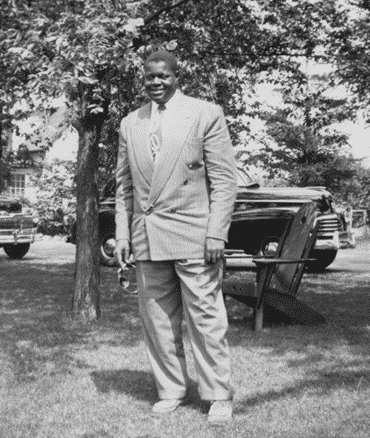
 In 1925, the same year that the United Church was founded, a baby was born to immigrant parents in Montreal.  Not terribly unusual, it was a big family, and there were already three other children and there would soon be a fifth.  The baby’s father was a porter on the railways and would regularly travel from Montreal to Vancouver for the princely sum of $90 a month.  The mother earned $5 a month as a housemaid.  It was barely enough to make ends meet, and many times the children stayed in bed because their parents hoped they would sleep through their hunger.  They were one of the poorest families in the neighborhood.

But that poverty did not define who they were.   They were committed to two things; Union United Church, the oldest Black United Church in Canada, founded in 1907, and music.  Every Sunday they would go to church, sing the hymns and play in the community band.  The dad had taught himself to play the piano and to read music and he was determined to teach every child the same thing.  As soon as the older kids were good enough, they became the teachers of the younger ones.  Hymns and classical music were what they learned, and woe betide the child who didn’t practise their scales!  They started lessons when they were three years old and big enough to sit at the piano. The oldest daughter became so good at teaching her younger siblings that she eventually made a living as a piano teacher.  Music gave her the freedom to leave the hard work of being a maid, to the hard work of inspiring young people to make music.  But that fourth baby was very special.  He could play a song that his older brothers and sisters struggled with, just by hearing it once.  He didn’t even need to see sheet music to play it.  He loved playing trumpet in the band until he got so sick with tuberculosis that he spent more than a year in hospital.  He never played trumpet again.  But then he discovered jazz!  That not only transfigured his moods and his hopes but also set the stage for his future career.

And what a career.  When he was fifteen, his older sister took him to the CBC radio station without telling him why.  She had registered him in an audition for a contest which had performers much older than him trying out.  He passed the audition, and won the contest against not just all the Montreal performers, but all Canadian musicians as well!  By the time he was 20, he performed to a sold-out crowd in Toronto’s Massey Hall, and by the time he was 24, he performed in Carnegie Hall.

He also struggled.  Barbers in Hamilton refused to cut his hair because he was African Canadian.  A white teacher in his elementary school called him racist names.  One of the bands he played in was banned from a Montreal hotel because he was their pianist.  When he became famous after his Carnegie Hall debut, he went on tour in the United States, and discovered that in the southern states, restaurants wouldn’t serve him, hotels wouldn’t let him stay with the rest of the musicians, and once the room he slept in had no bathroom but only a bucket of sand for a toilet.  With so much hatred targeted at him, he delt with the stress as best he could, remaining the polite Canadian he had been taught to be by his family and his church.  It was while on one of those tours that he was encouraged to write a new piece of music with a bluesy feel to it.  He called it “Hymn to Freedom” and it became the unofficial anthem of the Civil Rights Movement. A Canadian Song!

Now, I don’t know about you, but freedom has become an uncomfortable word in recent days.  It has been used to promote an extreme agenda, and equates temporary measures put in place for the common good of the community with oppression and dictatorship.  It was used to shut down awkward questions, and to accuse people who have differing opinions as being pawns in a supposedly increasingly totalitarian state.  It was being used to justify an individual’s desire to do whatever they want.  But freedom is not supposed to be a weapon to shut down dialogue, nor is it supposed to be a justification of behavior that ignores peace, order and good governance, our founding constitutional principles. 

Freedom means many things to many people.  Now we are reclaiming that meaning as we watch and pray over friends, relatives and kin in the Ukraine and surrounding Slavic countries.  Slovakia, the homeland of my grandparents, aunties and uncles, is also in danger as refugees stream across its borders.  When I visited as a child, there were secret police in every village, army soldiers in every street, and art of Lenin everywhere one looked.  Freedom was not part of the constitution.  Everything was controlled by the state and those in power.

Freedom, for our musician friend was seen as the precious and transforming principle for a whole nation.  He could have been targeted for vigilante violence by drinking at the wrong public water fountain, but his music inspired folks living with systemic, widespread and brutal racism to have hope.  His music transformed them as it had transformed him.  Just as God transformed Jesus on the mountaintop, revealing him as someone who was even more powerful and inspiring than the disciples guessed. Both men, Jesus and Oscar Peterson, knew that transforming the world so more people would know true freedom, would be hard work.  Both men worked hard for it even though they knew they wouldn’t see it come true in their lifetimes.  Both were determined to make a difference in this world, no matter the sacrifice, the personal cost.  For Jesus, it cost him his life, for Oscar, his personal life was a mess, and his physical health was not great either.  But he left an amazing legacy.  I found his piano course in a music store in New York, of all places.  He started music schools and taught the next generation how to play jazz and Bach both.  He challenged racist commercials on CBC.  He encouraged musicians to join AA and give up drugs.

And yet, when the top two jazz musicians in the world worthy of being mentioned in the Alberta government’s first draft music curriculum for Grade Six were announced, one was Glen Miller of “In the Mood” fame, and the other?  Not Oscar, not even local musician Tommy Banks, but Mart Kenny who didn’t even live in Alberta, and only recorded two records to Oscar’s 200 recordings spanning over 60 years, 7 Grammy awards and the first Canadian pianist to receive the Glenn Gould prize for music, not to mention the Order of Canada.  Mart Kenny’s biggest claim to fame other than the song “When I Get Back to Calgary” was being the grandfather of our current premier.  Both musicians were white, and we all know that many of the best jazz musicians were and are people of color.  So, racism is still here in Canada, sometimes subtly as in our curriculum, sometimes blatantly as demonstrated by some of the protesters in Ottawa, or regularly as related by Albertan United Church clergy of color.  And we are called to be as determined as Jesus, and as committed as Oscar Peterson, to use our privilege to challenge racism wherever we see it.  Black History month is a call to transfigure our awareness so that one day everyone will sing a song of freedom that will be true for all in the world.

February 22, 2022

Spilled Coffee

So I’m coming out of Paddymelon’s with a big coffee mug full to the brim.  Someone jogs my elbow and what spills out all over the sidewalk? Coffee? 

Well, those who know me really well will say anything but coffee unless I’m bringing a cup of joe to my husband Tim.  Tea possibly, chai latte or London fog, white hot chocolate, just about anything but not coffee.  Why?  Because what I put in my coffee mug is what will come spilling out. 

So too, what will come spilling out of my mouth may be any number of things.  Since I’m a Canadian, an apology.  “Sorry,” I will say, even if the person jostling my arm was the instigator of the spill.

If I’m at home and it’s been a long day, and Tim backs into me when I don’t expect it, there may be something far different than “sorry” spilling from my lips.  And if the coffee mug drops, splashing boiling beverage all over me then shatters to a million pieces, especially if it’s a favorite mug from a beloved aunt who has long since left this earth, well, even I don’t want to hear the words spilling out of my lips.  And if it’s been a really bad week, with a funeral that shouldn’t have happened to someone too young or too close, well, there just might be tears involved on top of it all, and a real honest to goodness grief burst!

What comes pouring out can be quite situational, and quite human.  Being human is a messy business, with emotions that hit us when we least expect it, sometimes right between the eyes, sometimes right in the stomach.  We find anger flaring up, resentment, frustration, jealousy, envy.

We pray, God, fill us good guys with good things, we’re on the right side, reward us please, and punish the evil doers.  Dry up their bank accounts, impound their trucks, put their kids in the foster care system, confiscate their weapons, and lock them up where they can’t threaten us anymore.  That too is human.  But thoughts like these can fill us up with evil emotions.

Scripture says “Be still before God and wait patiently.  Do not fret because some prosper in evil schemes.”  Easy to say, hard to do, especially when our nightly news is full of disturbing images of police in body armor, collections of guns being discovered horded by protestors, of politicians scolding each other, of racist flags, of children being taught to blockade legitimate traffic between two countries.  Be still before God, wait patiently.  Even harder, let go of anger, and recognize the damage fretting can do to the human soul.  Trust in God instead of imperfect, messy humanity.  One of the reasons I believe so many people were entrenched in Ottawa is because they put all their trust in themselves and no one else.  If the election brought in a government that they don’t like, they don’t trust the rest of Canadian voters.  If the medical community brought in restrictions that they don’t want, they sneer at the very people trying to keep them alive.  If the scientists make discoveries they don’t understand, they call them names and view them as part of a mass conspiracy.  If the media tries to communicate what the voters, the medical researchers and the scientists are discovering and they find it confusing, they turn to other sources that stoke their anger.  They only believe in themselves and the hope that they will get their own way.

They do not have hope in ideals, in principles, in due process or in the Golden Rule.  Do to others as you would have them do to you is not where they are at.  I suspect that they would not respond pleasantly if someone moved into their homes and started blaring air horns 24/7 for weeks on end.

Luke’s passage has Jesus recognizing that not everyone will be able to hear his words.  “I say to you that hear me”, or in other versions, “you that are still listening”, means that he too knew the messiness of what Jeremiah called the deceitful human heart.  Jesus knew that what he was teaching was so hard that folks were tuning out.  He had just told them about the beatitudes, the Blessed are those who the world think are cursed, and that was a conversation stopper for most of them.  Then he threw a real zinger at them.  "Love your enemies, and do good to those who hate you."  Well, that is so against what human nature wants to do, that it would tune out a lot of his listeners.  No way would good Jewish people want to hear that they were to be loving to the Roman soldiers that oppressed them, the tax collectors that robbed them, the schemers and power brokers that bullied them.  But that is exactly what Jesus was trying to teach them.  And with his ‘Turn the other cheek’, he was laying the groundwork for nonviolent resistance.  As one internet pundit wrote, "Let me be very clear.  This was not a call to grit our teeth and be nice to bullies, to stay in abusive relationships or to be quiet in the face of injustice."  This was a call to make sure everyone could see the bullying for what it was, and by standing up to them to offer the other cheek, or giving them your shirt as well as your coat, was to show to everyone around that they were doing this shameful behavior but you still kept your dignity intact.  But how does that play out in real life, Jesus?

A good example is the Greensboro sit in back in February of  1960, where young black college students prepared themselves to go to a Woolworth’s lunch counter and sit there until they were served lunch.  They knew it wouldn’t be easy.  They practiced so that no matter what violence was thrown at them, they would stay calm and not retaliate.  They would not punch back, they would not fight, they would not bring in guns or weapons or horns or hot tubs or flags, they would just sit until they were offered a menu.  Four young college students sat waiting for food that did not come.  The next day they were back, and the news spread to other colleges in the Southern US.  At one point there were 300 students at that lunch counter, and it became one of the cornerstones of the Civil Rights Movement.  Segregation ended although the racism never did.  But that Woolworths counter now houses the International Civil Rights Center and Museum, which includes the lunch counter where the Greensboro Four sat.

Coffee was served to anyone who wanted it, and tea and probably some iced teas and sodas.  And eventually the love that they had for their cause and for justice and equal rights for all spilled out on everyone around them.

What are you putting in your coffee mug?  What are you putting in your heart and mind?  Are you able to hear Jesus teach you to love your enemies and do good to those who hate you?  It’s not easy, of course, but I trust that this is what God is calling us to do.  Not to love the angry actions of the people who are hurting others by their noisy protests, but to look at them for the stunted shrubs in a dry desert, for the hopeless people that they are who don’t know how to trust in anyone but themselves.  Who put anger in their coffee cups and don’t drink anything other than that.  And to fill up our own coffee cups with stillness before God so that when the difficult times come and we are jostled by life, what will spill out will be peace and hope and compassion for all who struggle through these difficult times.

January 25, 2022

The Courage to Speak

Rather like going home to a big family reunion and people say, “oh, you’re little Nell, my how you’ve grown up” or they launch into a story of something we did when we were 8 and didn’t know any better.Preaching to the hometown crowd is a daunting task.  I have never preached in the church I grew up in.  There’s something about standing up in front of a congregation who remembers you when you were a little kid in Sunday School that is unnerving.    It would be hard to step into the preaching role in front of babysitters and teachers.

Yet that’s exactly what Jesus did.  He had the courage to speak to those old family friends, neighbors, matriarchs and patriarchs in the community.  He had courage because he knew his purpose, taken straight from one of the longest and most revered scrolls that are beloved by Jews and Christians alike.  Isaiah 61 became the core focus of his ministry and gave him courage to tell them what his purpose was. Even though he missed a phrase here and there.

Many students going into the ministry have a similar experience, a scripture that grabs them not just logically but also emotionally.  This one happens to be mine.  It was cemented in my head by the Strathdee Song, “The Spirit of the Lord is upon me, because God has anointed me to bring good news to the poor. God has sent me to proclaim release to the captives and recovery of sight to the blind, to set at liberty those who are oppressed, to proclaim the acceptable year of the Lord.”  In fact, it was around this time in 2007, in the season of Epiphany, when I went up to Rev. Dale Irving and said, “please stop reading these call scriptures and playing all these call hymns because they are making me cry.”  Hymns that have haunting words like, “Here I am Lord, is it I Lord, I have heard you calling in the night” that would have the tears streaming down my face.  Thank goodness wise and gentle Rev. Irving knew what to do with me, like a Hogwarts sorting hat!  But this scripture is not just for folks in ministry; if it was, Jesus would have only read it to his disciples, not the whole congregation in Nazareth.

Which is why we keep reading these scriptures – they are addressed to us all.  But how do we know when the Spirit is with us?  I think it comes through continual questioning and testing.  Jesus was tested in the wilderness.  We constantly are tested in our own wildernesses. And Jesus measured his decisions and actions by Isaiah 61.  We too can measure our decisions and actions by this scripture. 

What kind of testing are we facing right now?  I was struck by what David Staples wrote in the Edmonton Journal on Wednesday, “we all study COVID stats and listen to expert commentary, focusing on numbers and words that conform to our own basic needs and selfish desires.”  Basic needs and selfish desires are tests to our courage and our faith.  It is often hard to tell which is which.  Is a night out at a movie theatre a basic need or a selfish desire?  Is a trip to the pool if I’m not vaccinated a basic need or a selfish desire?

My head chaplain for K Division RCMP put it this way,

[Recently, I] realized the extra stresses that the pandemic has been putting on many... I think it’s the constant changing rules, the length of the pandemic, the insecurities it has brought, the feelings of social isolation and not being able to get away to recoup with family and friends.

The recent cold snap and not even wanting to go outside has also had an effect … These are just some of the things that are creating signs of depression and isolation that all of us are having to face.”

He spoke with courage about what we are all struggling with.  The mental health challenge of knowing where the dividing line between selfishness and need is.  The challenge of forgetting that we are called to respect and serve others.  The spirit was speaking through him just like Jesus. The Spirit was not on Jesus so he could have his best life ever, or to have wealth, influence and power.  The Spirit was on Jesus so he could help others find release from what imprisoned them.  We all want to be released from the imprisonment of Covid, but maybe what we really need is to be released from not questioning the difference between our wants and needs, from the difficulty of choosing what is right instead of what is easy.

Figuring out what is right instead of what is easy can be seen in the discussion of homelessness this week.  What is easy is finding a house people can live in and keep from freezing.  But homelessness is a complex issue that is not fixed by warehousing folks like Timothy Phillips.  What really is imprisoning them?  And how do we set them free from their imprisonment? 

Jesus spoke of truth and healing with courage.  We can do that by speaking our truths in ways that respect other people’s truth. Our views of reality may differ, but speaking our truth from wrestling with our own desires for easy solutions, and learning from the wrestling, is our way to connect to the Spirit.  We can’t free others from their imprisonment until we have freed ourselves.  And the way to do that is to check that we’re following the words that Isaiah gave us, reminding us that we are called to the same core purpose as Jesus, witnessing to the good news that freedom from oppression, fear, anxiety and selfishness is here in this, God’s year to act! May it be so for us all. 

January 11, 2022

Taking the Plunge

One of the joys of living in Athabasca is being able to walk along flowing water.  Being so close to the river and the creek is just wonderful, at least when it’s not -30.  We see all kinds of wildlife like the beaver in this photo, and while I’m glad not to have had a close encounter with a bear or a moose on the trails, Tim has.  I’ll stick to beaver spotting at a respectful distance.

I was surprised to learn that the Jordan River is not a grand wide river like the Athabasca.  At the place where John the Baptist was supposed to have set up shop, it’s slower and shallower than that, more like the Tawatina where it goes under the bridge during the spring.  Slow and steady.  Waist deep.  Muddy brown and probably quite refreshing on a hot day.  And a place of great significance even back then.   It wasn’t the size that mattered, it was the sense that this was the boundary between the land of outcasts and wanderers and the Promised Land.  The boundary between poverty and prosperity, between nomadic uncertainty and settled roots, between disconnection and identity, between chaos and purpose.  For the people of the Holy Land, it defined who was ‘us’ and who were ‘they’.  It was a natural border that became the difference between away and home.

A place to wash off foreign influences and prepare to enter the Holy Land, set apart by God for the people of Israel.  A place to prepare to go to the Holy of Holies, the Temple of Jerusalem, a few days' walk away.  A place to start new initiatives, new projects, new lives. 

No wonder John set up there, and that Jesus met him there.  It was full of scriptural importance for the people as well as symbolic importance, and a great place to make great commitments. We pick a time for new resolutions, but they had a place.  A humble, muddy river with a deep history for a frequently embattled community.  A place of hope, new beginnings and new possibilities.

How does that understanding of baptism in the Jordan affect the story of the Samarian baptisms?

The disciples, no longer able to sit at the foot of their teacher Jesus, are still safely ensconced in Jerusalem, hunkered down, and waiting for Saul of Tarsus to get tired of persecuting them.  They are focused on their own people, and remembering what Jesus taught them.  They start delegating work to others, and so Phillip the Deacon went out into the wider world, doing far more than he had been asked.  He found his way into Samaria, preaching and baptizing as he went, finding great success.  He followed the nudging of the Spirit and found himself far beyond Jerusalem, far beyond the Jordan River. 

He found himself outside his cultural community, with people who talked a little differently, who worshipped a little differently, who had a different cultural identity than him.  All those differences didn’t stop him.  Not even the attention of a shyster snake oil salesman in the town, Simon the Magician, deterred him.

Phillip kept on teaching and preaching.  And that got the 12 hiding safely in Jerusalem so curious that Peter and John left to check it out.  They weren’t there to fix or correct or advise Phillip, just to see if the reports were true and to encourage him.  They only were puzzled by why the Spirit had not been included in the baptism, a bit confusing even by our standards, but whatever they did or said to Phillip, he was emboldened to continue preaching and baptizing.  The next chapter is all about his encounter with the Ethiopian Eunuch and that was a transformative moment full of Spirit in the fledgling church.  Clearly, the message of good news was spreading beyond safe cultures, safe borders, safe languages, and catching fire amongst people that the 12 did not predict.  It surprised them and encouraged them.  It reminded them of their own baptisms, and the times that they had experienced with Jesus because of it.  It emboldened all twelve to eventually leave Jerusalem, ending in places like Rome, Spain, India and Turkey, far from the safety and security of the Jordan River.  Remembering their baptism gave them the courage to go out and live what Jesus taught.

Remembering our baptisms is not something everyone can do.  I was baptized as an infant, so I don’t remember what it was like.  But I remember my brother’s baptism, my children’s baptisms, my husband’s baptism and the baptisms I have done here among you, from seven-year-old Sidney and baby Emilie and  toddler Isla to adults Bev, Heather, Gordon, and Wendy, which I thoroughly enjoyed getting wet!  Every time we gather in community to celebrate and welcome another soul into God’s big family, I get a speck of something in my eye.  Every time we get to bless an individual and their spiritual journey and hear what a difference we have made in their lives, I get a lump in my throat.  I remember OUR baptisms!

Baptism is where we learn that Christianity isn’t just a philosophy, it isn’t just a logical bunch of ideas that stick.  It isn’t just a bunch of mumbo jumbo touchy feelie stuff that anyone can do.  It isn’t for sale, as the magician Simon discovered the hard way.  It’s more than community, although it’s part of community.  It’s more than miracles and signs, which surprisingly I have heard a few here in my time.  Christianity is an experience and a movement that empowers many.  It gives life and purpose to those who are struggling, it gives compassion to those who believe that they have to be tough individuals to be successful.  It challenges the magicians looking for power to rethink their understanding of what it means to be a thriving human being.  It challenges us all to reflect and reorient our lives towards God’s loving community.

Try this experiment the next time you are in the shower, the bath or even washing your hands.  Take a moment to feel the water and say to yourself a few times, “Remember your baptism”.  Reflect on how far your journey has brought you and ask God where you might be called like Phillip, Peter and John, to set out into the unknown with good news for all to hear.  Remember the nurturing, sustaining, and transforming power of God’s love and our grateful response to that gift of God, that amazing grace.  Remember that you are gifted, called and chosen by God to inspire and empower the people around you.  And if you are not baptized, I invite you to prayerfully consider it as a sign of hope and inclusion in this community of faith.  It is the sign of a journey, an adventure that leads us all in surprising new directions with a community that stretches all the way back to Jesus and John standing in a modest river, starting something that became bigger than their wildest dreams.  May our baptisms, past, present and future be part of God’s great plan for a beautiful world.  Amen.

January 04, 2022

Eyes on the Stars

There’s something so inspiring in the story of the Magi.  Following a star on a long journey that must have taken years to complete, one step ahead of another without a map or invitation.  On a hunch that they got from staring up at the sky.  Pretty amazing.  There must have been times when they felt tired, discouraged, maybe even doubtful or depressed, and yet they continued on. 

I felt discouraged this week, as Council discussed closing the church to in person worship again.  We have always put the health of the congregation as our top priority and been prudent and cautious.  But there was a part of me that selfishly wanted to keep seeing people in the sanctuary to talk to and worship with.  Thank goodness that we work together to come up with the difficult decisions that are for the greatest good of the community.  I imagine that the magi also faced similar conversations and conundrums, especially when debating how to return home.  It would have been easier to take a familiar path back, be treated like royalty in Herod’s palace, perhaps soaking in a hot tub to get rid of the smell of the manger and the sheep and cows.  Instead, they heeded that niggling voice that suggested they turn off the beaten path and skip Jerusalem on the way home.

It’s hard to know when to heed that niggling voice and when to ignore that voice.  Christians call this discernment, and it’s not easy.  We sometimes talk ourselves into doing something we shouldn’t, or talk ourselves out of doing something we should, and it’s hard to tell what is ego talking and what is God talking.  There have been times when we talk ourselves into doing things and regret it, and other times when we discover that our hunches have been very helpful.

I once got a gift of a simple notebook that someone had taken the time to fill with inspirational quotes but left plenty of room to add my own quotes to it as I found them.  She doodled and copied and scrapbooked probably 30-40 quotes into it and I have added some every time I find a quote I want to remember.  I also started to give notebooks of quotes to folks I knew that were getting ordained.  I now have a file of quotes and prayers for ministers on my computer, so I can print them off, glue them into the notebook, hand copy the shorter ones and send it on.  Last May someone from AST was getting ordained and I got another notebook out, but for whatever reason, I kept procrastinating on putting the quotes in.  Life was busy, it went to the bottom of my to do list, and I never got around to sending it.  Last November, I finally made time to put it together and sent it off to the new minister.  Imagine my surprise when I got a hand-written card back thanking me for the perfect timing.  It had arrived in the mail just when the minister needed a little encouragement.  The quotes hit home and inspired them to remember that they were not alone.  We all need a little inspiration once in a while, and we all find inspiration from each other.  I think it’s not a coincidence that the magi traveled in a group.  Jesus said, “where two or three are gathered in my name, I am there”, and whenever I am struggling to know what is wise, I know that gathering two or three, talking to our church council or one of our committees, is the best way to come up with new solutions or ideas.  New ways of working through challenging decisions, new inspirations, new hopes and dreams.

Scripture can be like a third person in the conversation, the wise words of experience that can guide us into new paths.  It can form and shape and inspire us.  It can surprise us when we least expect it to.  I was quite surprised to see that Psalm 148, the reading we started our service with, mentioned snow and frost, for example.  I struggle with the idea that God controls the weather, as I think this cold snap is no more caused by God than the floods in BC or the heat bubbles in Alberta last summer.  If God so loved the world, it doesn’t make sense for God to punish the world, or at least Western Canada with these huge temperature swings.  Much more likely for us to be experiencing the natural consequences of global warming from too much carbon in the air than an angry God micromanaging the polar vortex.

So while we treat scripture with respect, we also recognize and wrestle with its shortcomings.  Scripture didn’t understand bacteria or viruses, scripture didn’t know about oil and gas or machines or factories.  Scripture couldn’t see through telescopes to realized that Mars and Jupiter weren’t stars but planets.  Scripture is one of our partners in the discernment conversation, but not a voice that shouts to drown out the other voices.  John Wesley, founder of the Methodist Church, firmly believed that such conversations needed to include scripture, and community wisdom, but also logic and emotion. That can be a pretty crowded conversation, to weave all these aspects into decisions.

Yet decisions made together this way can lead to great wisdom, just like the wise men taking a different route home.  Wisdom speaks to us and helps guide us into decisions that might not be popular or easy but most loving.  Wisdom can inspire wonderful new ideas and creative solutions.  Wisdom can discover new opportunities that we didn’t know about.  When we look to wisdom to inspire us, and discover wisdom among us, we can find God leading us in new exciting directions.  Our Song of Faith puts it this way, “In and with God, we can direct our lives toward right relationship with each other and with God.  We can discover our place as one strand in the web of life. We can grow in wisdom and compassion. We can recognize all people as kin. We can accept our mortality and finitude, not as a curse, but as a challenge to make our lives and choices matter.”  May we find words of wisdom and choices through discernment to make our lives matter in new and inspiring ways this year.  Amen.